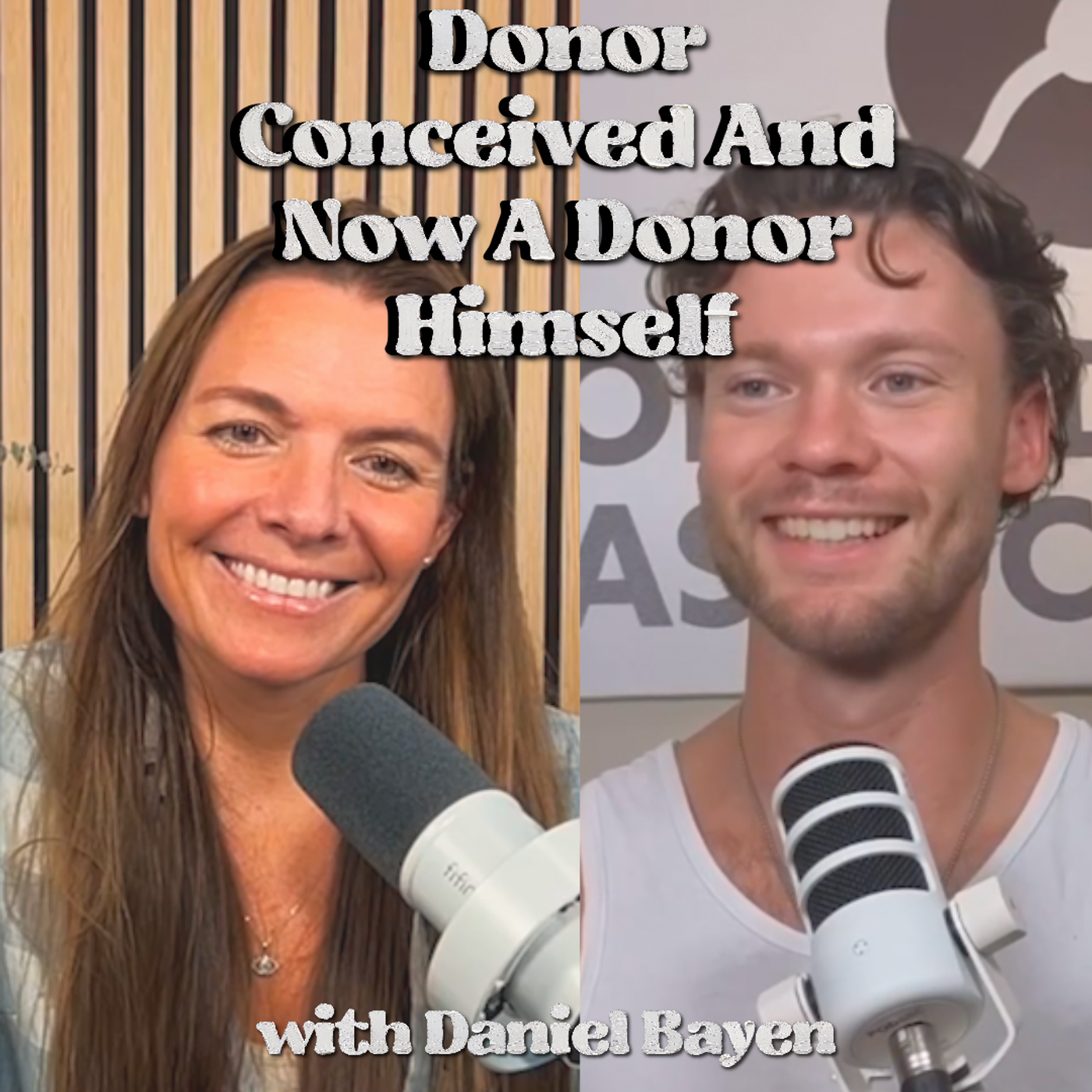
Episode 30: Donor Conceived & Now A Donor Himself with Daniel Bayen
Tonight's Episode
Sperm donation. Yeah, it has a connotation. You might have a movie scene in your mind and certain way you feel about it in general. But here at Confessions, we gotta talk about all sides of fertility and family building.
Donor conceived himself, Daniel Bayen is an open sperm donor ("open" meaning his name is not withheld in records). He takes it so seriously, it's his entire career. He talks about his views on the whole process, how involved he is/isn't with his recipients, how he feels about a lot of topics like traditional sperm banks and other donors who don't seem to take it as seriously, and what it's like to have biological children all around the world.
To get in touch with Daniel:
Instagram- https://www.instagram.com/donordan/?hl=en
Open Donor Association: https://www.opendonorassociation.com
To get in touch with Ashlyne:
Instagram: https://www.instagram.com/ashlynehuffblue/
https://www.instagram.com/confessionsofaslowcooker/
Website: https://www.confessionsofaslowcooker.com
Email: [email protected]
This audio and video podcast was produced, edited, and distributed by Small Batch Sound. https://www.smallbatchsound.com
Small Batch Sound: Hey everyone and welcome back to Confessions of a Slow Cooker. I'm Ashlyne Blue and today is going to be another minor departure from who we normally talk to. And that's usually like the carriers, the women. ⁓ but today is Daniel Baeon. Daniel was conceived through sperm donation, which is great. You know, he's here. His parents got a child. It's all good. But there are some other facets to it that he will undoubtedly go into. Things that a lot of us don't have to think about if we are our parents' biological children. Things like dealing with questions around his identity, who he was really in a biological sense, where he came from, etc. As Daniel grew up, the donor system left him with more questions than answers. And eventually, instead of just watching it from the sidelines, he became involved in two ways. One of those was to become a ⁓ sperm donor himself, a very open-minded, open one. And then he built the Open Donor Association, a platform focused on making donor conception more transparent, health focused, and human. Daniel. Welcome to the show. I'm really excited to talk to you. Thanks so much for having me on. I'm excited to talk to you as well. Yeah. So I was when I started this podcast, I wasn't necessarily like ever thinking I would talk to someone like you. But I I mean, I wasn't thinking I wouldn't. But like when ⁓ your assistant reached out to me, I was like, this is a really good idea. This is ⁓ I'm all about. Like I had my husband on to talk about his side of our IBF journey because I feel like that's not ta it's you the the woman always talks about how hard it was for her, what was going on. But ⁓ it it was probably one of the most imp ⁓ important episodes I've done to date to talk about how he felt about it. And so this I actually know a few women right in my life who are just now being they're having to get egg donors for their IBF. And so I was actually talking to one of them today, cause she just had her baby last week. And I was like, G you'll never guess who I'm having on here. And I kinda gave a little bit of a sh your spiel or whatever. And she was like, Well, that's I feel like that's so important. and it is, it is. So where do you want to start? You can start anywhere you want to. The first thing I had to think about is when you said you never thought you would talk to someone like me is what people tell me all the time. Everyone do that. ⁓ when I go on a date or when I'm traveling and when I meet new people, everyone is like, Wow, I've never met someone who does what you do. And the third thought ⁓ the first thought I have when someone says that is that there's really no one who does it the way I do because I'm one of the first donor conceived donors. So I'm donor conceived myself, I became a donor. And I think that shaped a lot in how I myself wanted to be a donor and the ways I did what I do. I also, as you might know, I'm like a full time professional donor, so I also do this for a living. And that is because I saw how much my mother had to spend on fertility treatment. She had to spend in the higher six figures, ⁓ not higher six figures, like mid low, low to mid six figures, but still a high amount. A lot of It's a lot of money. Yeah. Yeah. Yeah. ⁓ to have my brother and myself, and she she wanted more. She'd had no money left when when it was over. And my mother is German. We Germans we don't we don't know what we we try not to know what debt is or what credit card debt is and stuff like that. So when the money is is is gone, it's gone. which is also not not always a bad thing. But in that situation there was no more money left and she could not have more children, which kind of told me or or or showed me like, wow, we have this like open gray market where there's a lot of goofy donors that are not really ⁓ transparent, not really great guys. Also, I was always very interested and focused on having like a strong network of friends and business partners and family where I feel like these people are healthy and these people are financially, mentally stable, things like that. I couldn't really find that when I first got into the the open ⁓ spur market. People You could call it like a gray market or a black market, things like that. That just makes it sound sketchy. It's basically just like a platform or a place where people can connect to their donors. And I felt like, okay, if, you know, people can find a donor who is better than the options they can get from the sperm bank or from open donors, then this should also be something I could do full time, which doesn't mean I'd I jerk off all the time. This is what people come kind of thing. They think that's that's what people think when I tell them I'm a professional full time donor. That's also why That's also why why dating is quite hard. Dating is hard not because I'm a donor, but because these people have to explain their their family and their friends that their boyfriend is a sperm donor. And people think of a sperm donor, the first thing they think of is like a sperm bank donor who like makes I don't know, a thousand dollars, two thousand dollars a month by donating every other day. Or they literally think that all I do is just just donate sperm. That's like the the full time thing. So so yeah, it's what do you tell them is the question. Like ⁓ you're on a date, like what yeah what do you tell the date and then what does that date tell the parents or the friends? Well the question of of what do I do or what do you do for a living, I I try not to have that come up too early because I I Because I prefer having some framing and introducing myself because if you hear like, ⁓ this sperm donor wants to go on a date with you, the first reaction would be like no, please, it's fine. He's got kids everywhere. Right, right. That that could be an an issue. He's got kids everywhere, like all these women are texting him, they want babies, like that's too much. and twenty to thirty percent of of women are just not interested in dating a donor because of the ⁓ shared DNA thing and the paternal investment. that they are worried about and also because they are might be jealous that there's like women texting me ⁓ all the time and they asking me for babies basically. but yeah it is it is it is very funny. And I I just did a T V show in Germany where they were even talking to to a girl I was ⁓ going on dates with while I was in Germany. and I really normally either just share my Instagram account pretty early on, which is my donor Dan kind of platform where people f see the most of me and I kind of connect to my community and the recipients and keep them updated about, you know, whatever's going on. ⁓ so that gives them a better picture than just saying, hey, I'm a sperm donor. Or I like to first start with my story and my background if I do get the chance, saying that my father was a donor himself. I love my twenty two half siblings. I really wanted the same for my own children. That was the main reason I first started as a donor was that I felt like modern families are very small and disconnected in ways and that people struggle because of it. ⁓ like the childcare is usually split between only two people when back in the days you would have a large family network, you would have a lot of older siblings, you would have cousins, aunts, you would have uncles. And because people are having less children, ⁓ they don't have a hundred cousins anymore. Like it was pretty natural two hundred years ago to have a hundred cousins if everyone had ten kids on average. I don't think those were the averages, but like eight kids or something like that. Yeah, a lot of kids, yeah. Yeah. So you would have a lot of ⁓ cousins and for me, my half siblings, they were like a substitute for cousins, right? They're nothing like having siblings. And once I explain that and I I I share the picture and the idea for my own children who I'm going to be most invested in, of course. I I I'm also invested in the donor conceived children, but simply as a donor, not as a dad or a father figure, maybe a male role model or an uncle at most. ⁓ but then women start to really like it because it gives a lot of Credibility and social proof because they're like, ⁓ wow, like all these other women want children from this guy. So there must be something about him. Something to it. Yeah, yeah. Yeah. They're more interested in the Well, and you're just gonna need a really strong like someone who's got who's who feels really comfortable in her skin. which I'm, you know, as a di you know, I'm I've I've been divorced, I remarried and I have my my son through a lot of fertility issues or whatever. But like I feel like y this is weeding out the weak ones for you. Yeah, it is 'cause they can't handle it. It is it is. I believe in natural selection. That's something that you know is controversial. But as a donor, I see natural selection happen all the time when people choose their donors. And when someone doesn't choose me as a donor, but instead chooses like a cheap local option, like someone who is not taking care of their health. I just in the back of my mind I just think, Well, that's natural selection. There's not much you can do about it. Nope. No, that is and saying does go in into eating, yes, that's true. Yeah. And it, you know, it took me a long time for me to understand that rejection is like really good because if they don't want you now, they probably won't. So like a rejection it can be painful, but it also can ⁓ save you from some heartache later down the line. Tell me more about if you want to. Tell me more about like when did you find out that you were a donor Conceived? So my mother told me as long as I can remember. She probably told me before I could comprehend simply because she wanted to be sure she makes no mistakes when she shares it. She's also a professor for developmental psychology, so she kind of knows how important it is. Yeah. She's aware. she's aware of w you know, it's important to be honest to your children. And I think that most of the trauma and issues coming out of the Donor conception industry is just anonymity and lies where parents tell their child that the dad is the biological father when they really use the donor. ⁓ and I do have to fight an upstream battle against these stories from anonymity and from these traumatic ⁓ families. ⁓ because what I do is very different, but it is in the same industry, right? It's a little bit like comparing Whole Foods to McDonald's, if you could if you could make that comparison. ⁓ Where I'm of course the Whole Foods, no. ⁓ so, ⁓ she was always very honest. And when I was fifteen my father became an open donor. So he was a ⁓ bank donor and then later on an open donor. And And what's that what's that w like? I don't I I I don't know much about this and I'm guessing a lot of the people listening ⁓ and or watching don't know what this process is like in the first place. Like I don't know how to ask the question right, but Like how did you find out that he was an open donor at this point? So y you can differentiate an anonymous donor and open donor simply by the choice that the donor makes if he wants to be open or not. Okay. When going through a sperm bank, sometimes it's impossible to become open later. He decided to become open later and it was possible because of like a donor sibling registry online where people can sign up with their donor number. So he signed up when I was fifteen. My mother was super excited, first had to make sure that he really is the donor. Sometimes there's like just creeps or stuff signing up and pretending like they are the donors, but in that case he really was the donor. She told me like one or two weeks later. I got super excited. For me, this was like an amazing ⁓ thing. And I was very happy that my family would pay me a trip to the US because I was living in Germany. So I was like, Yeah, yeah, I get a free trip to the US too. Yeah. And so I traveled here and I I met him and he's he's like an uncle to me. ⁓ Okay. He's definitely also a mentor and a role model in many ways. He's one of the main reasons I decided. To become a donor too. He's very family oriented and very, you know, child centered in his life. He's raising three of his own kids ⁓ with his second wife. He divorced his first wife, who suppressed his choice to become an open donor at first. She wanted ⁓ to keep the paternal investment solely for her and her children, which is kind of a natural instinct, nothing I would judge. ⁓ but yeah, she she didn't want him to connect to the donor conceive children. And after they divorced, sh he could, ⁓ he was able to reach out. So that was kind of why he did that. fairly late. Now I'm a fully open and transparent donor, so the recipients they do video calls with me before I, you know, decide to work with them and they can connect to me and the child, once it's old enough, can talk to me. When I travel through an area and I know there's a donor conceived child, I you know, ask if I can say hi. ⁓ I'm not involved or anything like that as a donor. I also have like co-parenting agreements and involved donor situations where some recipients or mothers, intendant mothers want ⁓ more involvement or support, which is not like financial support or living together. It could be something like vacations once a year where the child gets to connect more to the biological father. It could be like video calls. It could be just sometimes a mother just needs support from ⁓ someone who maybe is more masculine and and who has a different perspective ⁓ than her. Right. ⁓ so I do that sometimes for single mothers by choice as well. Something I started recently because my goal is just to help ⁓ where I can and and people have been saying, ⁓ you're not taking on any responsibility. So I gotta prove them wrong a little bit too. Like I I do like taking on responsibility. And being a donor is also you have to take on a lot of responsibility when it comes to like your health and your testing how you communicate, things like that. but yeah, sorry, I think I w I went a bit off. I sometimes No, you didn't. I love it. I love it. ⁓ I I am a tangent queen, so you can always go off on any tangent you want. ⁓ how does it feel how okay, so I'm guessing you've met or FaceTimed, you know, with ⁓ with some of these kids at this point? So the youngest child, the oldest child is now barely one and a half years old. Because I started like two years ago when I was twenty four. I started donating. And ⁓ I've I've met them in person, I've seen them in person. I I would say they they like me and there's a connection but the mothers say they just like you like everyone else. Like everybody Okay. So how does it that's just my own perception. Hey you maybe you're connecting with them. ⁓ how does that how how did that feel? I I love it. I just love seeing ⁓ these children. I love seeing their families. ⁓ I will say that I'm not a a mommy type of guy, which means that I can spend like I can spend like half an hour, hour, ninety minutes with the child before I start going crazy and want to do my stuff again. so I'm not like and I think that's that's pretty good as a donor because if if you want to be a g around kids like all the time, then you know maybe like having a lot of kids yourself is is ⁓ makes more sense. ⁓ but yeah it's it's really just fun and I I I screen my recipients really well. I would ⁓ argue or say that the recipient network ⁓ that I have is the strongest of any donor in any sperm bank because sperm banks don't screen and most other donors don't screen either. They just have like a reproductive instinct and they want to multiply and reproduce as much as they can. Not all of them, but some ⁓ some more, some less. And sperm banks they just want to maximize their profits, so they're not really interested in getting you pregnant quickly. They're more interested in having you in on it for many cycles and selling you like a mystery box or like a donor that you don't really know, but it sounds wonderful on paper, right? So this sometimes, you know, criticizing these things, I do get a lot of hate from donors that see me as competition, from recipients I decline, or from people who made choices that I would argue are not necessarily the best for what you can do as a recipient when you're trying to or looking for a donor. But I try not to judge I still educate my own recipients and I still will will openly talk about ⁓ You know, what I what I think about the banks and a lot of the open donors who are really just guys who, you know ⁓ there's many who just want to have sex, for example, they're just trying to do a natural insemination, which I don't do at all, but you can imagine that there's a lot of creeps out there. so yeah, it is a bumpy road. I think it was in the eighties. ⁓ like I can't even remember the state now. Indiana? Maybe. ⁓ the there was like a a clinic where this guy, this doctor was saying that like they were selling this and it was so hush hush back then because it was it was not ⁓ it's a little more taboo if you if you couldn't get pregnant, you know, like the the IBF was probably in its very infancy, but so not normal. But not being able to have your have your own child and having to have a a sperm donor or whatnot would was really like shameful. ⁓ and I guess in some instances, because I talk to a lot of people, fertility still has a lot of shame around it if you if you have issues, if you have problems. and it shouldn't. That's why this podcast exists to try to say like we're pretty much all the same in one way or another at some point in our lives, and fertility is where a lot of it happens. ⁓ but but this ⁓ There was like a one clinic that was selling selling these highly educated, super healthy ⁓ sperm donors when it turned out they were like ex-cons and janitors and people like like they just weren't the same. There's nothing wrong with the janitor, by the way. I'm just saying what they were saying on paper was literally the opposite of what was what like the actual person who donated And I don't even know if they donated on purpose or I don't I I don't know all that story, but you know, ⁓ I something that I probably should have researched before I had you on was like what's the regulation around sperm banks? Is there any? Like ⁓ Yeah, there are FDA rules for sperm banks. ⁓ there are some that they have to ⁓ you know, go by. But the issue with the regulations is that when things come out It's usually like fifteen or twenty years later when the kids start doing DNA tests and they realize someone else. And by then who are you going to go after like fifteen or twenty years later, right? It's hard to ⁓ go after anyone. So when people say like, ⁓ sperm's are like the safe option, yes, they might be safer than just like going to a bar and ha you know, sleeping with a stranger and having a kid. But I think that reproduction is something you should not outsource. Just like you're not outsourcing ⁓ your choice of of husband. I know of course it's a very different thing, but that's work you simply have to do and and should be able to do. And if you're not willing to do that work, then natural selection is going to come for you. Like that's my my harsh r reality and personal opinion. And and I see again, I see people like making poor choices ⁓ all the time. I see the issues that come out of it later on both the donor side and the recipient side. I know a donor who never screens his recipients. He will donate to everyone no matter if they have mental health issues Or drug addictions or alcohol and smoking and unhealthy lifestyles. When I see anything, any sort of red flag pop up that could point in that direction, I'm I'm out because those are going to be the mothers of my children's biological half siblings. So I have to be super careful. And he has a lot of stress and drama in his ⁓ he called it his b baby mama circle, which is n also like an exaggeration because they're really just his recipients. ⁓ but I guess it's like an ego thing. But yeah. is it's is terrible. Like these women are just dramatic and making causing problems all the time. Some of them don't want him to continue to donate. Others he maybe did like natural insemination with, which is basically sex, and they start becoming jealous and things like that. ⁓ he hasn't been open about the numbers, like how many people he's donated to. So ⁓ it's it's chaotic. But I also believe reproduction is okay to be chaotic. Family is okay to be chaotic. ⁓ you know, as long as the children's are are the children are are safe and healthy and can make adults who can later then have children, I think everything's fine. and again it's like everyone's own choice. If they want to go to a sperm bank and take the risks that sperm banks offer, they can do that if they want to ⁓ you know, choose a partner or maybe a family friend who wants to be the donor. That's also an option, yeah. Yeah. Well and and I imagine, 'cause I we didn't have to go this route, but Yeah, it would be it like the the diff like I guess wanting to know, also like just for for health questions. If you don't know your health history, it's hard to make those informed decisions. Like for somebody getting older. You know, when someone says, Is there any family history of this? It's like, you you being around and being able to eat just answer that question, even via text message is really I feel like that's like a something that's really helpful. ⁓ Because when you think about like, yeah, the identity stuff. You know, who did I come from on one side of this? Is this is this n nature or nurture or what? But like also just like the the basic thing of just medical history and mental health history and things of that nature, I feel like that would be something I would really want to know and be well, I'm I'm I have anxiety, so I'd be anxious about. ⁓ so that that's just a component that popped into my head earlier is like that's something that some people don't know the you know if they're adopted or like that that's just just a little data point that I feel like is really great for on your end that you're able to like you're doing your due diligence and they can do theirs and everybody can have that open relationship as much as you decide up front. You know, just like with the surrogate, you like you have, you know, the there's just the the legal component, there's the the predecisions. There are a lot of those with IBF you have to decide what to do with embryos if someone were to pass away or if you were to get divorced. You know, you have to go through all the not fun stuff at the beginning, but it's worth it to to have that, ⁓ to to have that moving forward. And ⁓ I imagine everyone who works with you has the gratitude of all that transparency and ⁓ and ⁓ access, you know, that you guys decide on. Can I ask you about the identity stuff? How did you feel? 'Cause so you met your dad, ⁓ your your biological father. I ⁓ did you grow up with a father figure also? Like ⁓ a it was a single mother. My mother is a single mother by choice, but my grandfather was pretty involved. Yeah. Okay, okay. ⁓ so you ⁓ you met him though up until fifteen when he became an open donor, ⁓ you you meant or, you know, in the the biography and everything that I had to to prepare for this, it was like there are questions about it. What were those questions that I know you knew that you were donor conceived, but like how did it make you feel not knowing during that those earlier years in your life or having to explain yourself to friends or other people? ⁓ the the identity was never a really big issue. I thought that You know, I I kind of thought that other people had an advantage because they had a dad at home and I then later realized that they were just being spoiled and I I'm the only hard worker of all these kids. ⁓ everyone else turned out like to ⁓ want to have a lot of fun in their twenties and I just went through a pretty n yeah, it was a hard childhood with a single mother by choice who was a full time professor and also had no money when we were born because she spent it all on the fertility store. Exactly. ⁓ which was then my fault. No, I'm joking. But but yeah it it you know the identity was not I was not like thinking about it daily like and I had I had ⁓ I I had other benefits because I had my half siblings. So w other people were jealous of me because I had like all these half siblings in the US and I can imagine that my own donor conceived children, they will have an even stronger and larger network internationally because I've donated it in ten different countries to now like twenty twenty-five families. ⁓ I just recently moved move kind of back to the US. because they have like the overnight shipping with UPS here. So I ship with Clinical Grade Extender to home addresses. ⁓ sometimes recipients visit me as well, but I I really didn't want to travel anymore. I've been traveling for like two and a half years and a half. Like, ⁓ a new mountain. ⁓ wow a new building. Wow. That's amazing ⁓ man. So but but back to your identity, that was all fine. ⁓ there was not really an issue besides the fact that there was no r male role model around my mother more than me, because my mother she was trying to be the masculine in the forest and the feminine at home and the professor in psychology raising two boys, two sons who would take over the hierarchy and whose testosterone levels were going up before my donor became a thing or be before ⁓ he he was able to like involve himself or or support us. in like ⁓ advice and things like that. Yeah. Mm. And that was that was I think and that I think is more interesting than just the like the identity question because I've kind of learned how the everyone has a very different idea of family. But I feel like a healthy family is one where yes, the kids are struggling and like they're going through things and they have challenges and they have to do work and they ha have to do chores. I had to help my mother out in the house when I was like a couple years old, I was already helping with like laundry and whatever. I was making also working very early, making money when I was like my early teens and stuff like that. And those things were really great. I however also think that in in a lot of families or kind of the picture that also women in dating have about what a healthy family is, people are forgetting like where the strengths of ⁓ male role model or male partner lay. And they want to substitute the lack of intergenerational and family support with a male partner. So he that's kind of my perspective, and I know of course there's more to it. and there's also strange expectations men have. But ⁓ that's what I that's what I what I've seen. ⁓ and I it's not it's not easy, easy, easily answered, or my mother could not have just like you know, f find like a a a new sister or or or family support where she didn't have it. So it w it was kind of harsh like these teenage years because ⁓ there was just a lack of ⁓ of of s of like support from from people and her sh her grandpa ⁓ her parents, my grandparents were like an hour or two away. So it was really just her and me and my brother. ⁓ but I also think again like these these harder things have taught me so much and I'm very lucky that I have gone through them. Yeah. Yeah, I totally understand that. I mean, n I don't understand firsthand what you're talking about, but I understand that the hard stuff is actually kind of the good stuff at the end of the day. ⁓ yeah, you learn i if you get everything handed to you, you're gonna figure out the hard stuff probably the harder way later on in your life. ⁓ yeah. I some things don't come easy. ⁓ never come easy, right? Family and having children. I mean is what What you also see in like fertility and infertility. It's it's never going to be easier to have a family. It's always going to be as difficult as it has always been. Like having a healthy relationship to your partner, co-parenting or parenting together, raising healthy children, giving birth, like those things you're not you can't just outso I mean, you can get a surrogate, but most of those things you can't really outsource. ⁓ you can't really outsource. You have to do that kind of work. And if you didn't if you haven't had to do it when it comes to let's say money or your own health because your parents were always like taking care of everything. Yeah. ⁓ and you never had to s solve those childhood, teenage problems, then I see a lot of people they they are not they're incapable of growing their own family. Yeah. Not just for fertility reasons, but also like mental reasons and things like that. Yeah, you kind of fold easily if you don't have practice. in in overcoming things or sticking things out or yeah. ⁓ and I also go through a lot of infertility cases with with the recent case that I work with. like there's it's it's it's just I think it's just going to increase. I think right now it's one in five or one in six people struggling with with infertility ⁓ issues. ⁓ and it's really higher the older they get. Yeah. It gets higher the older they get. It used to be like one in ten or one in fifteen. Now it's one in six on average. I think over thirty or something like that. One one in six. But I I I see this all the time and I I I see the journey from like the first excitement to where people are like so excited, okay, we're gonna have a baby soon. ⁓ some people think the first cycle is just going to stick, which is unrealistic, of course. Even if you are very healthy, it's unrealistic for the first cycle to stick. And I always have to remind them to be emotionally prepared for it to be a journey. Because if they're not, then there's different reactions. But some people they just give up quickly. They're just like after two or three cycles, they're like, I think motherhood is not for me, which is natural selection again. ⁓ Yeah, but sad. It is it it is very sad. Some some people they have issues and start having issues with their partners. I think this happens more in And heterosexual relationships, which I don't really have a lot of recipients in, like maybe five percent of male fac male factor and fertility. and and and that can also be difficult sometimes, depending it usually depends on when did the dad I I refer to the men as dad, and because I'm, you know, I'm the donor biological father, depends on how or when they found out that they are infertile or they have fertility issues. If it's like been five or ten or twenty years, then usually there's no issues. But other than that, it can be kind of problematic for them. especially if then the partner like chooses a donor she really likes or a donor that is like attractive and healthy and things like that. Of course that causes like issues. ⁓ Yeah. I I you know I completely understand that. But I I see a lot of that and I go through a lot of that and I'm I'm also happy that I can later share these experiences with my own children, who I hope will be donors too. Yeah. Well, that is that is great. I love that. And so when you when you talk to someone like I I love that you're like having conversations around expectations too with them and not like you're saying, like you don't it's not just like the donation part of it. S speaking less than what you said earlier, but it's like you you you well, you give a shit about how how this is done. ⁓ and you also because you've been around it enough now, ⁓ you know that what you know the odds, the the statistics around it. And I I do love that you you aren't just saying here, now it's your problem, you know, so to speak. ⁓ I like I'm out. I did my part. We're also going through four cycles every cycle. Like we're going through four different ⁓ phases of the menstrual cycle, which is also can be can be a lot. also as a daughter. As a woman I Can concur. And you get the different like ups and downs and motivation and stuff like that. And then no motivation. And it's difficult to understand like how much I also as a donor should communicate to support them in the process because of course great recipients I don't want to lose, but I also don't want to overwhelm them or ⁓ anything like that. ⁓ but yeah, once they're pregnant, you know, once they have a child, it's just such a big blessing that everything else is kind of forgotten in that moment, you you probably had the same situation. ⁓ I relive it a lot on here, but the only way I even remembered it is cause I wrote it all down in real time. Otherwise it would be kind of one of those things that you it was you remember it being hard, but you don't remember the details. And because I'm a like an avid journaler, I I can r recall just 'cause reading it. But yeah, you'd you do kind of forget some of those like really intense moments. You just remember that it sucked. What's the mental toll for you, like going on this journey with people, you know, the ups and downs or whatever? Does it does it bother you ever? Or is it like you've like got your your methods, you know, like of of of dealing with the emotional side of of ⁓ donating and hearing it didn't work out or that someone's giving up or something like that. Does it bother you at all? Well, b before I was a donor, I I was an entrepreneur and I had like sixteen stores, two online shops and sixty employees pretty early. I was very much into like trying to make a lot of money young, and just working hard and building something big. So I was going through a lot of stress with that. That was a lot of stress. Like you would have someone suing you, you would have, you know, goodness bills to pay and stuff like that. It's just a lot going on when you have ⁓ you know, sixty people, ⁓ you hire sixty people and you have s sixteen stores you're trying to run. Was in Germany it was like a vintage a chain for vintage and second hand clothing. ⁓ and so to be honest, like that that really made me very calm to any sort of stress. Like I Okay It's hard to to keep up with that sort of stress and pain. ⁓ and also having a lot of biological offspring as a man I think grounds you a lot because you feel very safe and stable and knowing that even if things don't work out and dating with this person or even if things don't work out with this recipient or whatever, even if I die tomorrow, right? I I have cr helped create, you know, twenty five lives as of now. ⁓ and that is just like, yeah, it's very calming, very grounding. You know, it's like ⁓ you y it's I don't really get stressed about things like money or anything like that either, because I just think well, you know, it also when I see like other men kind of flexing what they have or doing what they do, like having a lot of money and my age it's usually my age is not family, right? It's usually money or health, like fitness, or girls, like women you you have and talk to or whatever. I'm just the kind of guy who's like, well, you know, I have twenty five biological offspring, so I'm like playing a whole different game. Playing a whole different game. Yeah. Yeah. ⁓ we can talk again when you're at number one then you we can Yeah, yeah. But it but it is very grounding and it is very calming and I think it's also natural for a healthy male to have a lot of offspring. ⁓ I know, you know, this might be conceived differently by by other people or also women because women they want the paternal investment mostly on them and their child, which is again something very natural. but I argue sometimes that what I do as a donor, including like strain stress and the pain that it it it sometimes causes when let's say a recipient has a miscarriage, of course like that's terrible. They definitely hit me and I feel them. Yeah. but again, it sounds cold, but I can't like let myself be pulled down or pushed down by anything like that. ⁓ like I ha I had a ex-girlfriend who kind of cheated on me. She went on a few dates and then fell in love with me again, when she thought she didn't want to be with me. But that also like it can't affect me because there's like people who need my w my help who want to have children and reminding myself, knowing that out there in nature it's it's harsh, like d it's tough, you know. ⁓ there is death and survival and stuff like that going on. There's pain and issues going on. that's just something I gotta handle as a donor. And I think people when I first tell them I'm a sperm donor, th that's the last thing they think about. But it does go very deep and it it it is it can also be very emotional. Yeah. Yeah. I mean and and that's just like because you ca again, you care. You care about, you know, you you you have boundaries because you know you there's only so much you can well control. ⁓ and like you said, being grounded with all your experience, understanding like what is worth you know, really lamenting and and and raking yourself over. Like there's you you don't seem like a very dramatic person, ⁓ which is great for what you do, but like you like you you care, but you're not overly involved. Like you kind of seem like the perfect mix of everything. So I understand why people want to work with you in that way, which and in you I'm so if I'm forty one and you're twenty six, you said, you're an old soul. And that is also I'm sure a an attractive thing for somebody who's looking for a donor, besides health, mental health, all those things. But you have this this ⁓ this old soul about you that is ⁓ that I feel like is like you said, it all this other stuff is calming for you, but to me, it's calming. It w it it seems like it would be calming for somebody, like someone who's ⁓ very responsible about everything in his life, but also pragmatic about about situations. And ⁓ so yeah, that's well that's really cool. Really great. No, I I I I agree. I think that my whole story and all that, it just sets me up well to be a a donor and and some ⁓ sometimes like my grandmother asks me, like, kind of in other words, of course these are not my grandmother's words, but she's like, What the fuck are you even doing? What kind of a job is that supposed to be, Daniel? Are you ever going to do anything normal? Yeah. Or what are you going to do if you can't do that anymore and things like that. But I'm just I'm just born to do what I do, really. It's really wonderful that I fell into ⁓ place with my work as a donor, being donor conceived and all that. ⁓ also and you know, my half siblings are not like that. They had other upbringings, other situations with their mothers was maybe not financially difficult for them or maybe they you know, they they have other career paths that they that they really like. So recipients they they do appreciate that, ⁓ with me and for me. And it it it sounds a bit arrogant when I say it, but I I do believe I'm the best donor in the world. Yeah. Hey, I that's great. I I think confidence and I spent my whole life people pleasing and trying to like, you know, like water myself down. And the older I get, the more I'm like, why did I do that? Why did I spend so much time self deprecate? Like, I'm fine with like I I'll joke on my I don't take myself too seriously. but the older I get, the more I'm like, no, like lean into the stuff that you're good at and be proud of it because Especially being a mom now, I want my my child to do that too. And if I'm always watering myself down, what's he gonna think he needs to do? You know? ⁓ and so yeah, I like that. I think there I think there is a difference between arrogance and like self awareness. It like I mean self aware confidence. ⁓ you understand, like you said, this might sound arrogant, but Like you're aware of how it could sound, but you're still willing to say it. And like I again, like I don't want someone to be like, I think I'd be good donor. Like, no, I want someone who's like, no, I'm the best one you can ever have. Like that's good. It's it's and I think it also arrogance is all in your delivery, ⁓ or in someone your your as in like universal you. If you have a tone that feels it, people can feel it. I don't get that from you. ⁓ so I I like that you ⁓ that you they carry that that amount of confidence around. And to your grandmother, it sounds like if you weren't doing this, if you had sixteen stores and sixty people were like you you'll th you'll figure it out. It sounds like you've got to grandfather That's what my grandfather Yeah, entrepreneur entrepreneurial spirit in that ⁓ that head of yours. So I'm not worried about you. ⁓ but I do love that you're fall like you're you know, you care about this, you you take it seriously, very seriously, and you're making a career out of it. And like shoot, people make c careers out of s influencing, you know? So like why what you're doing seems like a really important thing. And like you said, you've you've impacted twenty five families at this point. And not a lot of people can say that, you know, in in the most positive way. And and it's not willy-nilly. You you you do your job and like You treat it like a job as opposed to it being like, Yeah, I just donated. Good luck. So I I think it's wonderful. It is so unique for s to be sure, but it is it is really cool. And I I I know that that all the all the all of your offspring, just like you, like they wouldn't be here without it, you know. Not them at least, like maybe a kid, but not that per particular kid. So That's wonderful. Is there anything else that you want to talk about? Anything that we've missed? No, I think we talked about the most interesting things and and all that. Yeah. Okay. ⁓ Daniel, it has been so great to talk to you today. I am so thankful that you ⁓ took the time and that you're doing this. again, like this is so unique and I never envisioned having this kind of conversation, to be honest with you. But I'm so glad that we did and I'm hopeful that 'cause I actually do know some ⁓ some ⁓ women who are trying to figure out their next steps with fertility and so I'll be sending this episode their way. ⁓ and so I I'm glad to have met you in person all ⁓ virtually, but met you in person too and I'm ⁓ I'm so hopeful that you can continue to do the work that you care about and build families and make people's dreams come come true. As a mom, I am so thankful that the fertility world that we have exists, you know, with with all the interventions and the medical ⁓ possibilities. I would not have my son otherwise. And ⁓ for some people that includes your donation. So thank you, thank you again for coming on and sharing your story and being so transparent and being confident. ⁓ I also want to thank you for what you did in your work because I think a lot of women who are going through fertility issues, I mean I I know these women too, they don't want to talk about it openly and it makes it much harder for other women to make good choices when it comes to their fertility. Whenever I am going through a difficult fertility journey with someone who decided to have children maybe also A bit late. You know, I'm not I don't want to seem like is I'm judging it, but many people underestimate like how hard it is to have children later. Like I just had a recipient yesterday, I think she was 34, and I told her it's about 10% per cycle if she's healthy. ⁓ and she was like, wow, like this could actually take a year, statistically speaking. ⁓ and I was like, Yeah, it should it should take around half a year to a year, like statistically speaking, like that's what we're looking at. ⁓ and the fact that you are talking about it openly it it helps so many people just understand the risk of delaying family and I'm I'm as you can imagine not a fan of family delay at all. I think it's the worst decision to prioritize anything else but family. especially for money and things like that because, you know, money is just with AI and robotics it's just going to be a very different kind of thing and family is something that won't really change in a in a in a hundred years, two hundred years families will still have to be built by ⁓ people and not by robots. otherwise they're really gonna take over. ⁓ but but yeah, as long as w we can build families, I think we should. Then I ⁓ I appreciate when when people talk about it openly because I feel like many women are lied to by like the fertility industry ⁓ in ways too where it's like, ⁓ yeah, you can still freeze your ⁓ eggs and then do it at forty six and then those cases become like the lottery cases. Just like people believe they can win the lottery because they hear of these other people who win the lottery, right? Or sports gambling where people just share their wins and not their losses. So it's a lot like that. Of course. Of course. Well, that's that was gonna lead to what I was gonna say next. If you if anyone out there listening ⁓ or watching wants to get in in in touch ⁓ with Daniel I will have all of his information in the show notes. ⁓ obviously, you know how to get in touch with me. because that will also be in the show notes. ⁓ and if this somet is ⁓ this episode is something that you could share with somebody else out in your life, obviously if it helps you, that's so great. But like Daniel said, it is we are all going through something at some point. And fertility is one of those things that needs to be more out in the open, if for no other reason than to feel. seen and heard. But also, like he has been saying this whole time, there are a lot of statistics that are not in your favor. For me, as most of you already know, I didn't get to decide when I started trying because I got divorced at 30. And so I had to start over later. So it wasn't really in the cards for me ⁓ to to, you know, hurry up. I I had to meet the guy. I had to, we had to start. And then we had the fertility issues. And so I'm so thankful for medical intervention for that reason. But ⁓ yeah, I feel like a lot of times we think it's just gonna work out as as, you know, you build a family, like, all right, it's time to go. And then when you find out there's more that could peep ⁓ you know, perilous in your in your journey, a lot of people don't know what to do next and they didn't see it. So they kind of, you know, cower or or feel like they shouldn't, you know, who who do they ask? Who do they call? Because it's a little embarrassing, ⁓ to be quite honest. to have any fertility issues. You feel like that's what you're what your body's supposed to be able to do, if nothing else. So ⁓ if this would help someone else in your life, just share it with them. ⁓ you can even just direct them towards it and say there's a there's a particular one you might like or you might find useful. the best anyway. Yeah. ⁓ yes, the best donor, the best one. so anyway. Thank you so much, Daniel, for coming on and taking the time to talk about this. And it was delightful to meet you and hear your story. And ⁓ I wish you all the best in all your donations. ⁓ everybody else, thank you for watching or listening. I'll be back next week with someone else amazing. And until then, I hope you take care.
 Apple Podcasts
 Spotify
 YouTube
 Castbox
 Castro
 Goodpods
 Podcast Addict
 Moon FM
 Overcast
 Pocket Casts
 Podbean
 Podcast Republic