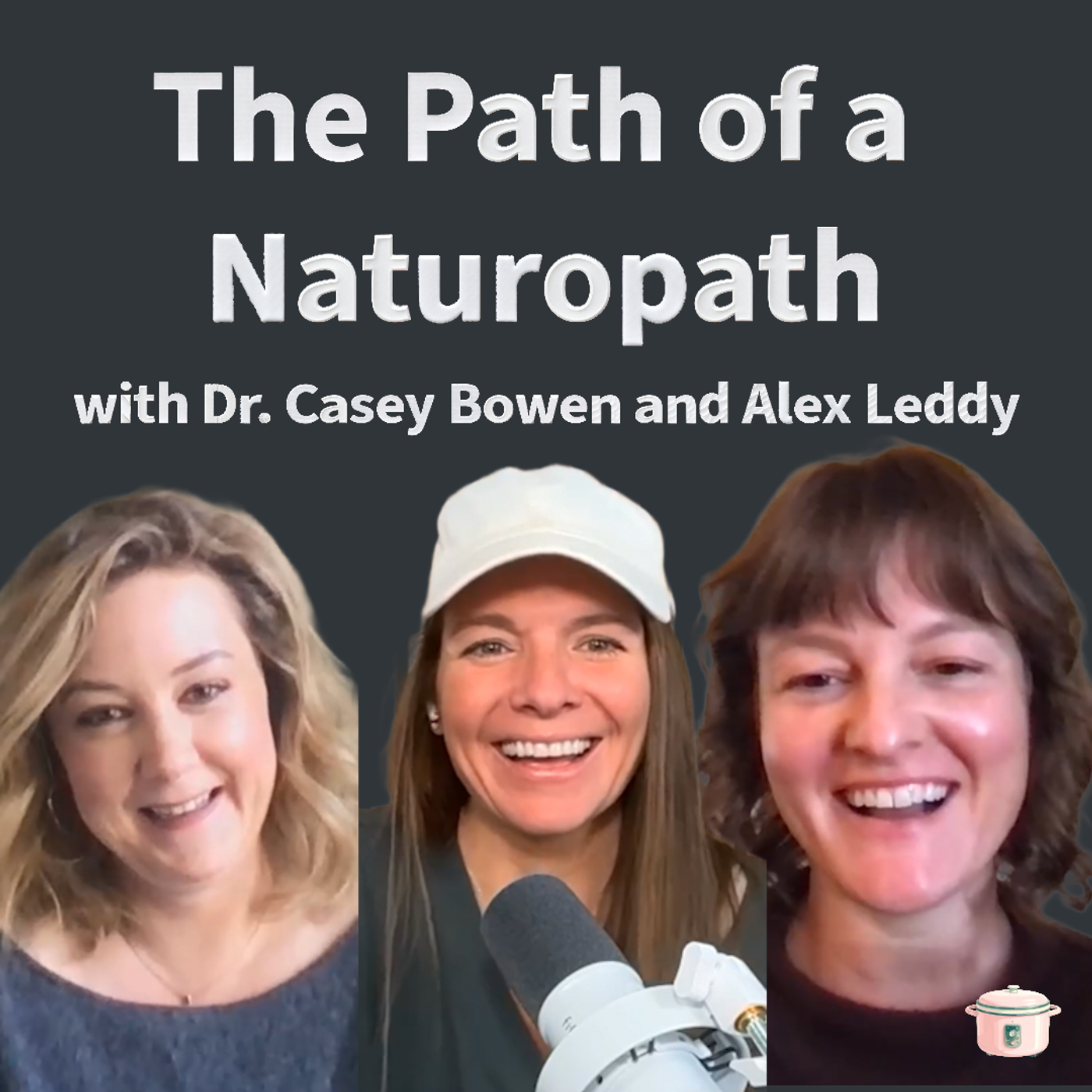
Episode 37: The Path of a Naturopath with Dr. Casey Bowen and Alex Leddy
Tonight's Episode
We've talked about alternative approaches before, but what about naturopathic medicine? Dr. Casey Bowen not only practices it, but she has benefitted from it in her own fertility journey as she has endometriosis.
Acupuncturist Alex Leddy is also back to round out the conversation, which is always so informative.
The conversation spans from how to talk to your daughter about starting her period, having awareness and wherewithal to investigate potential issues with your body before you start trying to conceive, and the importance of both partners being on the same footing as you begin your fertility journey.
To get in touch with Dr. Casey:
Dr. Casey Bowen's Bio
Schedule your complimentary discovery call
https://pmc.ncbi.nlm.nih.gov/articles/PMC8056307/
To get in touch with Alex:
http://www.alexleddyacupuncture.com
Red Earth Carbondale: https://www.mountainwestwomensherbal.com
To get in touch with Ashlyne:
Instagram: https://www.instagram.com/ashlynehuffblue/
https://www.instagram.com/confessionsofaslowcooker/
Website: https://www.confessionsofaslowcooker.com
Email: [email protected]
This audio and video podcast was produced, edited, and distributed by Small Batch Sound. https://www.smallbatchsound.com
Casey Bowen Video: Hey everyone, welcome back to Confessions of a Slow Cooker. I'm Ashlyne Blue and today I'm bringing back a goody. She's not old, so I won't call her an oldie, but she's a goodie. Alex Letty is here, my acupuncturist in the valley here in Colorado, and yet again she brought someone who is super knowledgeable, but this time it's not one of her patients. She's a naturopathic doctor, and her name is Dr. Casey Bowen. Hi, Dr. Casey. Welcome to the show. Hi, thank you. It's a privilege to be here in the slow cooker space. yeah. We slow cooking. Alex, why don't you talk about how you met Dr. Casey? So I have have a patient who was working with Dr. Casey. Simultaneously, Dr. Casey reached out to me. I was saying to Ashlyne, I think it was over the summer, right? That we originally were corresponding via email. And we figured out a time to meet for coffee just to introduce ourselves to each other. and because Dr. Casey's down in Carbondale, she's a naturopathic doctor, and I think she also knew we had a mutual patient. And so then it was like, How can we work together and share patients and get to know what each other does? And we had coffee and I just instantly thought she was awesome and so knowledgeable. And one of my patients ended up Getting pregnant. And so anyway, it's an I think in large part to Dr. Casey's work. And so, you know, since then I recommended people go see her because I think it's hugely helpful and beneficial for so many reasons. So welcome, Dr. Casey. Yeah. I I'm so interested. So we had last time Alex was on, we had Mackenzie, SodaQuist, who is a mom. Now and she saw functional and naturopathic doctors during her journey. I don't think she saw you, Dr. Casey, but so we're not referring to that specifically, but I do think I've had a lot of functional medicine related doctors, chiropractic, things like that on the the the show. And everyone has a little bit of a different like angle, which is so interesting to me. which it sh also shows just like every other doctor out there, your specialty. Is your specialty and how you get there is interesting as well. And I do want to hear about how you got to your your practice and everything. And I want to hear all about you in general because we just met today. but yeah, I'm excited to hear the naturopathic side because I feel like I've heard the functional medicine part quite a bit. And I feel like everybody is I I well, I haven't asked them, I haven't polled them, but I feel like everybody would benefit from hearing from another angle of everything. So what made you get into this? and do Any any way you want to start really, but that's sometimes a good way to start. I know I feel like there are so many directions I could head with this. But before I do, I just want to say, Alex, the feeling is mutual. When I met you at the coffee shop, I was like, and you know, acupuncture and naturopathic medicine is just such a potent combination. And so, I think it's a beautiful collaboration. And how I fell into this is you know, I don't think I went to naturopathic medical school thinking I'm gonna specialize in Fertility. but as I, you know, the program is four years. I went to Bastier University, packed up. Which by the way, is an excellent, excellent school for those people who don't know. It's probably the number one naturopathic school in the country. Just tooting tooting Dr. Casey's horn. Great school. I went there because education was it was really tough. I was like I honestly first year felt like sweeping my kitchen was a welcome break from studying. So but yeah, no, I I chose that year because it's on this beautiful state park. And so it was really nice to be able to go on runs through the forest between classes. But anyways, as I learned more and more about naturopathic medicine, and I think, you know, I did have this kind of almost like a subconscious interest in infertility. because I I have endometriosis and my periods back then in my twenties, I mean like I felt like a train wreck. They were so painful. And I remember actually one day in college, like just trying to get to my class and I just had to like sit down against a tree and pause because I couldn't walk. I was just in so much pain. And so I think I had this like subconscious knowing that fertility was gonna be a struggle for me. And so throughout my program, I was seeking out extracurricular training in infertility. I did preceptorships at an IVF clinic. I did a preceptorship with a naturopathic doc whose focus is in fertility, functional medicine. So I definitely was seeking out any and all I could. And the more I learned, the more I realized that naturopathic medicine is such a beautiful approach to infertility. Yeah. Yeah. That's How did it make you feel? I asked this to pretty much anyone who kinda has that gut feeling that they're gonna have issues. How did that make you feel at the time, if you can recall? was it since you were in the it obviously made you wanna seek out more information about something that you may have to deal with, but which is great, you were in like the perfect setting for such things. But yeah, how did it make you feel? Was it I don't know, I'm not gonna give you multiple choices. Yeah, I mean I think just the process of going through this doctoral program was incredibly empowering for myself. going into it, I don't think I even realized that I had an endometriosis. And I thought having a painful period was normal because it's become normalized, right? Like so many of us have painful periods. and it's not normal. It's a sign that you should, you know, figure out what's going on. And there are multiple causes for that. But I think it was really empowering to understand that there were multiple tools that I could employ that I was learning about to treat myself. So yeah. And I've said this before, but pain is so subjective. Like your tolerance has everything to do with it. And then also there's the pain and like y when people are like, Well, pay periods are painful. Well, they can be. and and that's very normal. Like again, that's It's so hard to pinpoint what is pain and like and how much is too much for it to be something that you should look into further. Like there's it in ours if you're listening out there, can you come up with a device to help us have a like a a a standard for like if it's worse than this and and then not subjective? I don't know. I don't know. I'm not a science person, but I'm just putting it out there. I feel like that is part of the problem because we just don't know how it How it feels to the other person. We just we we only can use our own and every doctor, I assume, can only use really their own sense of what is super painful or terrible or whatever. It's yeah, we need we need we need instruments. Right. No, I know it's so tough. we have these pain scales and we ask people to give us a number, but everybody's experience of pain is so different. And to add to it. We with endometriosis, the severity and degree of lesions within the pelvic cavity isn't necessarily correlated with pain at all. So well yeah. Okay. And I think it's just a nebulous thing. Yeah. I think it also just speaks to I I don't know if Doctor Casey, you experienced this, but I find it really fascinating. when women come in and they're trying to get pregnant and they're on a fertility journey, so many women prior to trying to get pregnant have no idea how their cycle works or what's really going on in terms of what you're saying about pain. It's like, is this normal? I think there's so much that's not taught or learned about and people don't really understand what's happening in their bodies. And so when they try to get pregnant, they're like, What do I do? And what is, all of this stuff. And it's and then you add any issues like an endometriosis or fibroids or other problems. And it's like there's just a lack of understanding. And that I think that's why a podcast this is so great. And just people knowing women knowing that there are options out there to deal with all sorts of gynecological issues as well as trying to get pregnant. Do you find that to be true, Dr. Casey? Like people are just kind of like, what? Yeah, I think it's a mixed bag, right? Because I'm seeing oftentimes when folks come to see a naturopathic doctor, they're like deep into their fertility journeys. Yeah. And they're like, right from the back, they're like, I'm cycle day five right now. Like I can tell you I ovulated day 12 last cycle. I led four days, like they give me the whole spiel without me even having to ask for it. and I wish that more people were coming to see me in the in preconception. And absolutely. Like I think that there our health education for young women is really lacking because this is information that is really important to know. It is important to know that there is a time in your cycle that like you don't need to go run a hundred miles, right? There's a time in your cycle to rest. And there's a time in there's a reason why maybe you feel sad or anxious during a particular week. And that knowledge is so powerful. And so really this education, while it's wonderful to start in preconception care, like it should be happening with our eleven year olds, our twelve year olds. And that that I if if you're watching this and you see me kind of like looking around, I'm thinking, I'm thinking, what can we do about this? Cause we are all three local. Can we come up with you know, can we come up with something that we can take to some schools in the valley and say, Hey, this isn't f for everybody. This is just for the females in this grade, but maybe just one little I don't know, afternoon, you know, or or during during a a free moment. Like just bring them all together and like let it be a QA and a lot of an introduction to stuff, being like, Hey, these things are starting to happen. And I want you to know that you have a resource in the valley to reach out to to talk about these kind of things because and like this is what you should you can expect and this is th this is stuff you should not expect. So if you're having it, maybe you should talk to somebody about it. and you know, kind of start like if if if the podcast is great, but no eleven year old's listening. Yeah. Actually, I'm so glad that you brought this up because this is like one of my dream projects is to help mothers understand how to help their daughters embrace this threshold of becoming a young woman and like really embracing like Our power to create another human is incredible. It's divine. And I want our young young women to like embrace that and own it and learn about themselves because it should be happening then. And not okay. So maybe not the go straight to the eleven year olds. Maybe it's the it's the moms and you know, single dads in the ballet. Maybe it's saying, Hey, let's go let's all meet at one of your practices one night, like we'll do a little like QA and this is what these are the conversations you should be facilitating, these little questions you should be asking, if these are the things you're noticing, and and if they want to bring their kit their their girls, then they can. but maybe make making s establishing the the point of care with the with the parents, or the guardians instead of I don't know. I'm just I'm spitballing here. But I feel like there is a way to do this that is not like you don't like the people aren't coming to you in times of distress. last resort. they should know that this is wanting to get pregnant. Right. Exactly. Exactly. Let's learn about the cycle. No. Right. Yeah. Well learning about the cycle, also learning what what could could constitute something that would need to be looked at a little bit more. Also like just making young girls like I I think I started around eleven. And I've really open parents like there was but we didn't talk about it. We just acknowledged that it was it was here. it's here. You know? And then I had pretty I feel like regular for regular sake, but my sister did not. And so they had to take, they had to figure something out for her. But the first thing I've heard over and over on this on this podcast with guests, the first and only thing that people do is put you on birth control. That's it. There's nothing else that they do because they want the pain to be to go away or they want it to be more regular, which does help the pain sometimes or whatever. But all that's doing usually is masking a problem that could e at the very least be acknowledged. But also it could also aid in nothing being helped or ign like the acknowledgement later, it's like there's stuff that could have been done possibly and we've lost that time. And then now you're like and now it's compounded because you want something from your body and your body cannot give it to you until you get everything else cleaned up. Mackenzie is a perfect example of that. Like of she's like, well, okay. Now I gotta go to see all these people and you try everything you can and you're but you're already stressed. And especially if you're older, you feel like you're behind in the first place. Yes. One thing just to piggyback, I was just looking up on my phone. I don't know if you've heard of this, Dr. Casey, but it kind of goes along with what you were just saying that there's like I mean, I love the idea of going to schools and sort of making that like education something with moms and and daughters, but There's something called Red Earth in Carbondale. Have you heard of it? No. It's a it's a yearly festival. It's the next one is July 30th through August 1st, 2027, at 13 Moons Ranch. Okay. And it's like where there's a bunch of like men are not, you know, it's only women. And you can bring your daughters and you can bring your kids. And there's like a whole bunch of herbal There's different speakers and they talk about different herbal medicine, fertility. There's different people who are kind of psychic and you you can camp out there for a few days or or you can just go and attend. But the whole thing is like I think you can bring sons if they're like four and when they're four and up, it's only girls. And it's all about like teaching them how to be women, basically. The whole thing is very women central, which I think is like that. Mm hmm. Okay, so next year. Maybe next year. But also, you know, for those who I don't know, I feel I feel like maybe there could be a a piggyback. Like that could be like the central thing, but like also doing something on the other side of the year, you know, in the in the deep winter or something like that, and and having like a little like chat, fireside chat, if you will, about other things and just like getting people locally to understand their resources locally. in in the the space and if you need someone to talk about it, mom, you can talk about it to me. I'll explain how the phases would work because I feel like a lot of people who have had children still don't know. Hmm. I am I might I feel like a lot of people who if you didn't have trouble, you probably don't know all the things because you didn't have to learn I had to learn everything there was to know about my stupid cycle because I had to stay like you said, when you have patients, Dr. Casey come and be like, I'm on death days five, and then this is my luteal and this is my w whatever. And they just like use all these terms and I'm sure there are a lot of people listening to this being like, I don't know what the hell they're talking about because I didn't have to deal with that. I had something else to deal with, you know? And so I feel like making it a normal thing, because it's happening to us every every month, should be something we like dedicate more time to. And the red earth thing sounds great. I just feel like We need to supplement that too. And and maybe we can do one maybe we can have just an episode b that is about the cycle and maybe a a good not Q and A, 'cause there's no there's no A or there's no Q, I guess. But maybe P or Okay, I'm thinking about this in real time. Everyone listening, sorry. what if you're I actually think that's a great idea. Like somebody can people submit questions the cycle. Or like you go like somebody like Dr. Casey's literally like, Okay Day one of your period. Mm-hmm. And then all the things that are happening. Yeah. we can also do it right now, but but but I do think maybe there's a good like staple episode we can make out with this information so it's shareable to people outside of our valley. It's not just something that that's a local thing, but like it's how to talk to your daughter about her first period. How to ask questions to gauge whether or not things need to be looked at a little bit further. how to talk about the cycle as a whole. And like you said, making it something that's not like, mm, she started her period. gosh, she's just growing up. Like it's something to learn with eyes wide open and something you can like like hold dear as a young woman and a parent of that young woman to guide through the next stuff. Yeah. I I think that those messages that young women are receiving when they get their period are so important and they're it's it's a monumental time in someone's life and the messages that they receive from their loved ones and their friends matter. I remember I told when I told my mom she was like, That sucks. And so then I started I know. And I'm like, yeah, yeah, okay, it does but that's not how that's not the message that we need to start this period of our life with. I mean, it's I think it's something to be celebrated and cherished and yeah. What what's a good way to like I mean, in my head I'm thinking, okay, that's like that's the response that like I think I I don't have a daughter, but like Okay, this is big. This is a change. All right, here we go. And you know, especially for for single dads, like what do they say? You know, I love that you keep bringing the dads into this conversation because I think you're right. Like, it should be more than just the mothers holding this space for their daughters. it's so funny that some mothers aren't good at getting this conversation. But like for me, I think that Acknowledging it with ceremony and community to take away the stigma because I I feel so it makes me feel so sad that young women are walking around feeling like embarrassed and ashamed about their body when really this is like a beautiful thing. Yeah. And so yeah, I think bringing more their community into into a ceremony or celebration of this transition could be hugely impactful. And is for those who get to experience it. And I feel like maybe the first thing to tackle is how do you feel about it, parent? How do you feel about the idea that your child is growing up that something that was hopefully gonna happen? one of my best friends, she didn't start till she was twenty two because she had issues. She's been on, Jennifer Newell, for anyone listening. and she knew she had issues because she didn't start. And so like it is something that she would have celebrated it. Literally, because she finally did. I remember where we were when it f she was like, I got it And but yeah, as a twelve year old, eleven year old, whatever year old you are, it is scary and new and it's blood. Okay. Like it's gross. But you know, like no one wants to bleed any part. And so i it and it's it feels we all those things. cramps are are n are a new place to have or like, you know, around that area, it's a weird place to have pain because it's like I don't know. And maybe I'm the only one because who knows who what everyone else is feeling. But like it it feels like deep in like something you can't like rub. You know, like you ow, my hand hurts. Okay. My arm hurts. Like, but it feels like it's it's hard to find. Like you can't just you you kind of to just sit with it. And so that and as as an eleven year old or twelve year old is like, what is that? How do I fix it? And if you're an an active kid, like I was it was at dance practice when it happened, which is great. yeah. A Leotard. if you're if you're active or whatever, like I think that's so important to know. Like your body's not gonna feel that great this week, you know, and that's okay. There's nothing wrong with that. Your body's okay to feel a little so you have a little bit of an explanation as opposed to it being something that you're just like, what's wrong with me? It's like nothing's wrong with you. Your body's doing what it's supposed to do. And there that like permission to let your body Be your body is kinda I feel like when this happens to me all the time. I'm 41, still happening. but I'm like, I'm really sad today. I'm really, really depressed today. And my husband's like, what time of the month is it? And I'm like, yeah. And that explanation helps because I don't, I'm not using extra energy trying to feel like I mean, find out rather, like what what's going on here? How do I f why do I can I like I I use less energy to try to pick myself up on those with that explanation. I just kinda let it flow and not to use the word flow, sorry. I let it wash over me as opposed to trying to like dig my way out of feeling low or less me, I guess. So I think I don't know, tools, tools are helpful. To segue this back to Dr. Casey's work, what would you like? Okay, so when somebody comes to you and say, for you it was endometriosis that was your issue, speaking of segueing periods and painful periods and all of that. and then if they're coming, if that's one of the issues they're presenting with, what is your general because I learned this with, you know, having coffee with you, what is kind of your general approach with women, with men? If there's a problem, if there's not a problem or a known problem. obviously by the time they're coming to you, there usually is, it's taken a little while possibly. kind of what are the steps that you talk people through? I would love to know that. And then also maybe just for people who don't know, can you explain the difference between functional medicine versus naturopathic medicine? You're a better host today, Alex. No, no, no. Alexa Only because I spoke with her and I kinda know some of it because we did this, we walked through some of it. So then I think that's helpful for people to know, in having issues, painful periods. And maybe Casey, Dr. Casey, you you work with people outside of fertility, like with people with just endometriosis, or is it only fertility? That's a lot of questions, but there's a lot coming back here, Alex. I'm like, where do I start? I wanna get back if this is okay. I wanna get back to really what brought me into this space of specializing in fertility. I will see women for you know, related conditions, right? Like for someone who's not trying to get pregnant can oftentimes look similar to someone who is trying to get pregnant. And so I feel very capable of helping you know, a lot most women's health conditions. but what brought me to To specialize in fertility was my own infertility journey. So I, you know, we weren't falling pregnant and we went through a conventional workup. And on imaging, we discovered that actually one of my ovaries was adhered to the back of my uterus. And I'm like, okay, that explains why my periods are so dang painful, right? And so, and I had also developed a hydro salpinx. If you guys are familiar with that, it's where the fallopian tube is expanded. And so they're like, sorry, start over with that part. Hate again. A hydrosalpinx. Which essentially just means the fallopian tube entrance is wider than it should be and it changes the fluid dynamics and flow and so can it can impact the the egg's ability to, you know, navigate the fallopian tube. Mm-hmm. And so, at this appointment, I was told, you know, you guys are like like this is bad and you're likely gonna need IVF to fall pregnant. And of course, as a naturopathic doctor specializing in infertility, I'm like, no. I'm not ready to go there because I really believe other than this, like I am a really healthy person and we should be able to do this. And after finding out this information, I decided to supplement my naturopathic care with something called Maya abdominal massage. and so I went, I actually studied the Arvigo techniques of Maya abdominal massage. I did two courses, one in New Hampshire and one in Belize. Whoa, and cool this modality, if you guys aren't familiar with it, I think Alex, you probably are, but it's so wonderful for fertility and for any pelvic pain. And interestingly enough, after a year and a half of trying to conceive, my partner and I did fall pregnant just about a month after I did this course with like a lot of I was receiving a lot of my abdominal massage as well. And what do they do? If you can explain it. Yeah, so it's funny that Because you were talking about how do you even massage the uterus? And that's what this this is all about. So it's an external abdominal and pelvic massage. And the whole the whole point is to help the organs be in alignment. And so things like bad ski accidents or endometriosis or surgeries can kind of change the position of the uterus. And so the massage really gently helps guide the uterus back into midline. And when folks are experiencing menstrual cramping, this it's something that I always look at. Well, is there uterus in midline? Because when the uterus is in the optimal position, periods really aren't painful. And it's easier to get pregnant too. so retroflex, uterus, antiverted uterus, all these things, my abdominal massage can really help with. And how how do you spell that? I'm trying to visualize my my My just like Mayan, A Y A. And you know, it's like a it's a technique that has been passed down through Mayan healers for thousands of years. And so I feel really privileged to be able to provide it for my patients. And it also increases blood flow to the pelvic region, helps increase hormone production. So that's kind of an adjunctive thing that I do in addition to the naturopathic care. Mm-hmm. Well, and you also can speak to it on a personal level, which I think is always so great. It's not something you can like when you go into any career path, you know, because it's not just to for doctors or whatever, but when you can have have that extra like this worked for me, like it it just it just builds more trust with your patients. and like you said, it doesn't have to be in in pursuit of wanting to get pregnant or you say fall pregnant, which I like. and it makes I'm like visually like, huh, I'm pregnant. it does happen like that for some people. Yeah, yeah. Whoops. but yeah, I I love that you say like it's it's it's optimizing your body to work like it's supposed to, which is kind of the whole game. I think Western medicine tries to do that in a lot of ways, but I think that what you're saying, I'd rather try the other way first. I feel like a lot of people don't I'm trying to like think back to me. I think a l a big issue with when you find out there's something going on w later on and you didn't know you had issues is a lot of people figure them out when they're already feeling behind. And I I mentioned that earlier today. Yeah. And that's a stressor on top of it. So I think it's easier for some people, probably myself included, to be like, no, I want it to be a clinical thing. I want it to be I don't want to waste more time. I don't have time. and that's just like that, you know, you want the not gratification. It is gratification, but not like in a I'm I want to be happy way. no, I want to get pregnant. and what can I do to get there? I want the path of least resistance and I want it to be as quick as possible because everything's felt slow, you know. So I I that's just another reason to start this before the pursuit of pregnancy and and building a family, to get your proverbial body ducks in a row. And I I I hope to to that this podcast can be a s like in service to saying that. So people have it in their just brains to say, okay, maybe I shouldn't put this off if I'm even thinking about it, or if my niece is thinking about it, or whatever, and just mention, hey, do you know where your uterus is located? You know, that's just just a normal question to ask somebody. No, I don't. Okay, you should go get a Mayan abdominal massage. Yeah. Would you say that the Mayan abdominal sage massage is equivalent of womb healing. yeah. Because I I can also say, like I agree with Ashlyne that like before you try to get pregnant, you know, doing thing just trying to be healthy is huge. But, you know, after having babies, you know, like I I know after I had my two, you know, like there is a lot that has happened that, you know, like after you have one Mayan abdominal massage and womb healing, To really heal, because it's also just like it's such a it's a the most beautiful experience to be pregnant, but healing that before you try to have another one just to be healthy in your whole region would, you know. Yeah, I find it's hugely powerful for women after birth, not immediately after birth, but you know, six to eight weeks following, just to help start to reintegrate your connection with your own body. Because I think So many women experience they like lose that sense of themselves as like a sexual being and like the the transformation and changes that can occur with pregnancy are profound and I think oftentimes women, you know, come out of that experience like one, first of all, sleep deprived and totally changed and also like who it who am I and like what is this body? And so I think it's a beautiful tool. Yeah. And and even if you don't want for myself, I'm not looking to get pregnant again. Would you still I mean, just to like you said, just bring it back? Actually, yeah, calm down and experience it. Okay. Yeah, I'd be happy to give you my abdominal massage. It's like it is lovely. Yeah. I had a C section and I've felt I've for the longest time and he's two and a half now, so it's I've had I've I I feel like more like myself every day. but that was radical. feeling. I don't know. It's just an extra layer that I didn't I didn't know I was gonna need. Obviously I'm thankful for the the otherwise he would not be here and I might not be here because he wasn't coming out. but but yeah I felt I I ha I had a hard time with the lower part of my belly for the longest time. Not like physically looking at it, but I mean it was weird to look at, but it just felt odd. And so yeah, I could have probably shoot, I'm two and a half years late. But it's okay. I'll come to that. It's never too late. Never too late. My abdominal massage is for any body. Actually, like ST accident too. Yeah, yeah. Yeah. So and even for women who have had a hysterectomy, it's really a beautiful thing. So I will tell my mom. What's the difference between Natr naturopathic and functional, and where do they intersect? Because I'm sure they do. Yeah. So naturopathic medicine has been around for much longer. And the the principles of naturopathic medicine really is that the body is able to heal and find balance on its own when we give the body the tools it needs and when obstacles are removed. So in modern day era, right, it is so common for people to have nutrient deplete. Diets, right? And we are exposed to a plethora of chemicals every day. And these we know these have a huge role in impacting our endocrine system, our hormones. And so as a result, it impacts our fertility. And I think this is why we're seeing this increase in infertility rates, is you know, it's a medley of of things, right? And also like the stress of modern day life. So Naturopathic medicine incorporates like we're trained in functional medicine. I would say it's like the original functional medicine, right? Where we're trained to look at the biochemistry of what's happening in the body. There is this like medical scientific approach to understand understanding the pathophysiology of what's going on. And it beautifully combines that with traditional healing practices. And so you get to combine these. things and therapies that we know have worked for thousands of years in other cultures for particular ailments with modern day research of, you know, why these therapies are actually working, modern day research on appropriate dosages. And and so I would say in many ways, naturopathic medicine is functional medicine. But we're also trained in herbal medicine, homeopathy, We have really extensive training in nutrition. So and then, you know, supplements and also pharmaceuticals. yeah. And whereas functional medicine, you can obtain a functional medicine degree by, you know, being a conventional provider and then supplementing that degree with the functional medicine. But in a functional medicine course, you know, you may not be necessarily learning about more traditional healing methods. Okay. Okay, so it seems like it can combine, l about acupuncture and the herbs too. It's almost like it's in between super eastern and super western. It's like, I don't know, it's kind of the in between using being being able to pull from herbs, being able to pull from the functional medicine, Western, the the combination, like being able to do Western blood tests, you know, read lab results, but then having different readings on ranges that are appropriate, looking at the ranges in a different way and approaching how to how to influence lab work in a different way, perhaps. Totally. Yeah. A lot of the lab work I'm using is it's much more in-depth than you'll get in a conventional fertility workup. And so yes, I mean there's a very scientific way that I am investigating why hopeful parents aren't conceiving. but then my tool belt feels extensive and that is amazing. And it's empowering for people to get to be able to choose their path. Like I would like I would like to incorporate more vegetables in my diet, right? Like that's hugely impactful for getting the phytonutrients you need to improve your egg quality. And some people want to take that on and and some people don't. So you so you're like basically it's not like, well, sorry then. you're like, okay, let's try this this approach. Yeah. Well, it's individualized medicine, right? And so I'm never gonna recommend something for my patient if they don't want to do it. I think my job is someone to help help them understand their choices and navigate the fertility journey that feels appropriate for them and their timeline. Right. And so you know, who am I to say someone shouldn't do IBF? That is their decision. Right. And I I'm like fully on board to support someone through IBF to improve their success. and I'm also, it's it's up to the patient to pick their journey. And I'm like along for the ride. Just I feel like that's Alex too. Am I right? Yeah. Yeah. I mean, I think that that's fertility because I think that people come in at different places in the journey, like whether they're just starting out or They've been on the journey for a long time and they have less, some people at certain points have less bandwidth where they're like, I I don't, I can't take one more supplement. I'm not gonna do one more thing. or in the beginning they're welcoming all things. And you just have to really be and then I, you know, I always say, and I think Dr. Casey as well, there's like the spiritual component and like this this whole other part. I'm with that piece, I feel like I introduce that once I get to know somebody better, because sometimes people are like, Whoa, this person's a total quack. I don't know what she's talking about. you know, but I do think there's so many layers and you approach people where they are with and what they're comfortable with, because sometimes the spiritual piece is gonna be like, Woo, too not helpful. and same thing with supplements and same thing with, you know, sometimes when I tell people to come in you to come once after your cycle, once before ovulation, once after ovulation. They're looking at me like, it's already a lot, just the appointments. So you know, yeah, it just depends. So questi this is part back to I Alex, the host for today, asked earlier. asked the like so when someone comes to see you, obviously This is not like you said, it's it's individualized. So it but before they come in, how would you if you if I were to be a a a a new patient of yours, what what do I expect on the first what could I expect on the first time? Like what are we gonna do? We're gonna sit there and talk about things. obviously intake forms, like things like that. But what what's a little different maybe that in your office than maybe another medical doctor or even functional. Ashlyne, I'm so glad you're asking me this because I'm like, we should have started the podcast out with this. So I don't know. We've done this wild tangent of how young women need to learn their cycles. It was my fault. Yeah. which like obviously we're all dreamers and I'm really excited for what's gonna come from that. But yeah, so I think naturopathic medicine is beautiful fertility, and this is why we know that often sometimes there are anatomical issues, right? Like just yesterday you recorded a pond a podcast on like the heart shaped uterus, right? And like there are op there are anatomical obstacles to getting pregnant. But there are also so many systems. Well, I shared earlier with you before we started, and everyone else who's listened to the podcast knows my husband had to get his sperm manually you know, retrieved. So we it wasn't just my body that needed it was it was a twofer situation that I think IVF was the next natural next step for that. So anyway, continue. Yeah. So so obviously no amount of coQ tin is gonna solve someone's blockhold, right? Like let's be real. And so the first thing that we always do is make sure that there aren't anatomical obstacles that need to be addressed first. The other thing that I require, which I think is different than a lot of conventional settings, is that I'm actually requiring male partners attend the very first session. And I'm requiring that they get a semen analysis, a comprehensive semen analysis, which is more in depth than like a typical semen analysis because we know that men are 50% Sorry, 50% of infertility is male factor related. And so why, why do people have to wait six months, one year until insurance recovered in an analysis? Right. And it's it's infuriating. And so I I I there are a few cases where I'll make exceptions, but for the most part, like I will not see people unless both partners are involved and sold from the beginning. Because the tr the truth is seeing a naturopathic doctor is not necessarily the easy route, right? Because the things that I'm asking, the the things I'm having people do are really focused on ac actually like healing the terrain of the body so that you can receive a pregnancy. And that doesn't happen overnight. Sometimes we get lucky and find some quick fixes. but it usually does take some time. I think what's different about naturopathic medicine is that I take a systems-based lens to the body, right? outside of anatomical issues, there are a lot of things happening within the body that in can influence fertility, right? Blood sugar dysregulation, oxidative stress, inflammation, the microbiome of the gut, the microbiome of the vagina and the uterus, fluid like fluid networks. How are the hemodynamics within the pelvic cavity? how is your cervical fluid and discharge, right? That's like a super highway for sperm. And if that's not viscous enough, it can it can be a barrier. And so there's all these different things that I'm I'm looking at at and investigating in my initial intakes with folks are two hours long to really get a good understanding of like what pieces of the fertility foundation need some TLC. And that's different for everybody. I love that you talk about your requirement now. because I do think you have to make it like this is non negotiable and you everyone's gotta buy in to this path that we're taking. literally with the natural path, but also the path because it is going to be a journey that you're going to walk together. And I do feel like it is so normal. It was normal for me to walk it alone for a while because and and and I'm not I'm not, you know, shitting on Marcus. I love him dearly. He obviously went through quite a bit for us to have our little guy. But At the beginning, I think it's just nor n so normal for people to think it's the woman who's gotta get her stuff together and if there is a problem at all. And we're so used to having problems as g women, because we have a period. We have, like you said, discharge. I haven't thought about the word discharge since I was like in high school. But I like to call it surrounding But I remember it. I remember, yeah, that too. I haven't but like I I never thought of it as a as a as a tool. I thought of it as something that was annoying in high school. Like I didn't think about it like being something that would be helpful later down the line because it was just an i impediment for like Nina, like it's it's worse today. Why is it worse? I didn't I didn't think about the biological side of it. And so taught you. No, no, and bringing it back to the education for girls. Yeah. So let me get back on my soapbox. but but well, I love that you have a requirement now. To say get on board now or don't waste the money. it's an expensive journey, I'm assuming, as well. And if you're not gonna do it, if we're both not in, don't I gotta work with both of you. and and you just go get your mind right now because it is a headspace thing. It's I feel like a lot of men think there's something that is like it's a it's a hit to their ego if they need to get things checked. 'Cause what if something is I think it the most interesting I've heard they don't somebody said her partner didn't want to get checked because he didn't want to find out something was wrong. And I was like, that is a dumb reason. because it doesn't mean something's not wrong just because you didn't figure it out or find out. Like you're gonna keep on the what's the alternative? You just keep on trying and hoping it either goes away or like it doesn't matter as much and you can still get pregnant and not figure not like deal with the problem. Like hit it head on, go ahead because they're probably is something you can do. Something, whether that's western, eastern, in the middle, whatever. But just pretending not wanting to do it because you don't want to find out bad news is the shittiest decision I think you could ever make for your other the other partner. You know, and women included. So just like switch it around if you want to. But there there's so much research out looking at the quality of sperm. In the three months leading up to conception and the impact that it has on the health of the pregnancy, right? And reducing pregnancy complications, things like preclampsia, right? and also the future health of the child in preventing things like metabolic disease and diabetes, and so and and and some other conditions too. And and I think that this isn't common knowledge, and that's definitely a conversation I've had. With my male patients in that first appointment, is I'm like, listen. Fatherhood doesn't start when the baby comes out. Fatherhood starts now because you have this powerful, powerful window, right, in that two and a half months that it takes for a sperm to fully develop, leading up to conception to really influence the health of the pregnancy and and your partner's experience in growing a human and the health of the future child. And you know, a lot of people don't know this, but sperm actually contain the blueprint for placental development. And yeah. And so a lot of the and it and it it just it does just go to show like that sperm are really sensitive to exposures to heat. We know this. their quality is heavily influenced by diet. And so I I just that's like my big message. And the people need to hear it from me. They don't they don't hear it from Dr. Wife, right? And so That is why it is so important to me to have men a part of this conversation from the beginning. Yeah. Well, and knowing and the buy-in, like the mental buy-in is there, but then also like just the education piece alone, like we are in this together is really helpful for the woman too, to know that they've got they're not like dragging to to feel like you have to drag somebody along, it's an extra thing you gotta deal with. And to try to get rid of the dragging. Like it's like, no, we walked in together. We're both here. We're both present. We're both listening. No one's on their phone. Like we both take this as seriously. That I think is very important for the for the female, from the start too. Like it it just like starts it, I don't know. It does I and on a team. It's a team. I mean, and it's like you're with parenting, you're it's a team. I mean, know there's different dynamics always, but it is like There's so much that a man can do for his health in the same way that we can take our health that then you have a better chance of getting pregnant and then also a much healthier baby as well. It sets you up for success. That's what I was trying to get out. Like it it starts you off on the right foot, both together as a team. Like this is how we're gonna approach everything. And it doesn't feel like there's a little bit of a two step forward, one step back. Well, now you gotta get involved. And I don't know what we're doing here. Why are we even here? What you know, like it's like, no, let me start you off the way it it can like benefit you both. And because marriages really can get rocked during this time, minded. and my husband talked about it on the podcast. Like, we're we're very open about it. It wasn't like we were at the end, but like there were times when he was like, Are we gonna make it? and I think that that emotional piece is so big. not to mention, you know, like you're trying to have a baby and that's gonna be big too, like to have the baby. you know, and like if you if you're successful, then you have another thing to to do for the rest of their lives. And so it's like, let's let's go ahead and like let's get at the starting line. Both feet are on the the line, you know, and and next to each other hand in hand, and let's do this. I feel like that could just only benefit everybody. And bringing it back to what some of the woo-woo and out what Alice was talking about with spirituality. Now we all have our different ideas about how babies come to us, but I like to think that those little spirit babies in the universe pick their parents, right? Because there it's some type of lesson that they're supposed to learn in their lifetime and vice versa that the parents are to learn from their child. And I just think about these spirit babies, they they know when it's the right time. To come. And I don't know about you guys, but like if I was a little spirit baby, I wouldn't choose parents who aren't working together, a mother who is not feeling supported in her journey, because we all know after after the fertility journey comes the newborn. And women absolutely need support. And so that needs to start now. Like that president needs to start now. I agree. I mean, it's a contract between the baby, the mom, and the dad. Like I think of it as a triangle. And it's like you know, there it's like a it's there's a choice made on three sides. And if anyone sort of is not a full yes, then that's when it doesn't happen, or sometimes there can be miscarriages or sometimes you know, like it if it's not a fit, and so it really is like putting that energetic movement into this is a yes. We're all doing this. and there like you there's a lot that can be done if there are issues for sperm. I mean, you know, not taking hot baths, stopping smoking weed, reduction of alcohol. Like I think you told me, Dr. Casey, there's a huge statistic about alcohol for men with sperm that I had no idea. Yeah, I can't say the specific I can't say and maybe Ashlyne I'll give you the the link to the research article. I'll put it in the show notes. it was this huge study out of China. It was involved five more than five hundred thousand couples looking at preconception lifestyle factors and health outcomes in the children and alcohol was so bad. It was I can't I can't I don't want to misquote it, but I I wanna say it was bad. It's so bad. It was really bad. In increasing the like one drink. It was like one drink one drink a week. Or one drink a week and it was like thirty three percent I yeah, I wish I could quote There was a big increase in birth defects. Yeah. There was like a six percent higher boy, this is bad guys. Six times higher risk of developing a birth defect. You didn't have to ha know this before coming on. You know can research is is can be just shared. We it's so bad. If that's what we that that w it was it was impactful. We'll say it that way. So men cut out alcohol, if you just cut out alcohol you're making a big difference. You know? Mm-hmm. Mm-hmm. Huge. and I I think all of this is really important to just to to say like there there are things you can do. Like it's empowering to know there are things you can do to give yourself a better option. and and the one thing I d I did want to say is it even if you have all this buy-in, even if you like that doesn't mean that you're not gonna have like a hard time, you know, it but when or if if and when you do you've got that stability next to you and vice versa. And during I feel like I'm really thankful for our fertility issues out on the back end because it did s really bring our our issues to the forefront. And we had to deal with them before Archer came to be. And we also saw what we were capable of getting through as a couple, which was great because it was a you know, I some people get married and they wait a couple of years. We didn't we we started pretty soon after because I was about to be th geriatric. And so I know if you get married later, which is a kind of a thing here in Colorado than than where I come from in Nashville. Like it it's it you get you typically, typically things are changing, get get married sooner and maybe have a couple of years just you guys or whatever. So you're not like crunching it together. But your stuff is even so your stuff's gonna come up and It was such an opportunity for us to really solidify our marriage and our s our foundation in ways that we didn't we probably would have like it would have been like 10 years down the road had we gotten married well before and just never dealt with this. And maybe we wouldn't have had the issues to begin with. So all that to say it this none of this is like a a way to get out of feeling pain or feeling frustration or fear or whatever, but having a partner, literally and figuratively. during the process can make all the difference in how down you feel or how the ups are so much better with someone who's been paying attention. so anyway, I don't know. Again, I'm I'm soapboxy today. I'm sorry. You got me feeling all cagey because I'm like I mean I just I well I love that you're doing this podcast first of all because no one should have to go through a fertility journey alone. And it's something that I think people And myself included, right? I've been through this. I'm not just saying this as an outsider. I really felt ashamed that like I couldn't do what my body was meant to do. Yeah. And there was a whole nother level that I like, I'm a naturopathic doctor and I'm supposed to know all the things. And like those things were like not necessarily working for me. Right. And I just think imagining like, you know, I have patients who are going down to the IBF clinics in Denver on their own. And I'm like, It's it's what it it's just such an isolating journey for so many people and to not have not support from your partner is just like a whole nother level. Yeah. And I went I had to go down for some of my step alone because of just like he had to see patients here and whatever. And like it was kind of it was it was but like I had the support. You know, like I knew I had the support. And I also also brought my mom in. My mom was like, I have time, I don't have to be anywhere. And so she flew out from Nashville and st and hung out with me during the days when we weren't Sure, up until when it was time for the egg retrieval or whatever. But then when you know, like when and then as soon as we had a date, he came down, you know, and he he rearranged his schedule for it. But I had options you know, like and it's again, it's it's about your whole tribe. It's everybody in your tribe knowing. Right. But and some people do go the route alone on you know, on purpose. Like they wanna be a mom and they don't have a partner. And so they're but that doesn't mean they have to be alone, like you said. Like it you come in like you need you need to figure out you're you're who's holding your hands? And I do think you need more than one hand being held. Maybe not every day, but you do need you need those people. and maybe that's holding Alex's hand, you know, on the other side. Or maybe that's holding Dr. Casey's hand on the other side. But having those people who are in your corner, they're gonna tell you the hard stuff because you need to know. They're also gonna give you options. They're gonna you know, if if there are options. I I love what you said about let's go ahead and rule out the the stuff that the heart bicoronate, is that how you say it? Uterus. It's heart shaped uterus. Yeah, the anatomical stuff. Like, let's rule that stuff out so that we know that that's we're not we we wanna we know what fight we're having, you know. because that clarity can really help. I heard today this morning, like a diagno a di it was a misdiagnosis piece on the news or something, the actress or whatever about MS, but saying a it was a doctor weighing in saying, A diagnosis is the biggest tool. It is the hardest thing to know if you don't have one, because it's it helps you direct towards the thing you can do to fix or or or harness whatever it is you're trying to get next. And it also gives you the opportunity to do something about it. But when you don't know, that's the scariest thing. And I feel like most people come into fertility not knowing. And I love your approach to saying, like, let's get all this out. It's not like what I usually do. I feel like yours is it seems or it sounds to me like there's so much intention ahead of everything. And I would feel good if I had right now fertility issues in in pursuit or just wanting to figure out how to feel more like myself and my body, to come to someone with that kind of approach. So I I love it. Sorry, it took us like forty-five minutes to get to what do you do? but I do love what you do. And It's actually my fault too. I just you know, when we have three, sometimes it's hard. is there anything else, either of you, I know we're short on time because Alex has a patient soon, I'm sure you do too. anything that we've missed that you wanna mention? There's that one piece you just were talking about diagnoses and how empowering they can be in helping know what to do. And I immediately thought about folks who are receiving the diagnosis of unexplained infertility, which is actually about 30% of people who are receiving fertility workup, which is a huge amount, right? So that means you've gone through all of the workup with your Obi-Guyne, your reproductive endocrinologist, you've done all the tests, all the imaging, and they still don't know why you can't conceive. And that is a really tough diagnosis to receive from the experts. And I think that naturopathic medicine is a wonderful route to go if you know in your heart that you can conceive and you I think people when they're given this diagnosis, they're often there's this sentiment that, like, okay, well, we don't know why you can't get pregnant, so you you're gonna need IBF. And I just it's infuriating. I just think that that's simply not true. There are so many other approaches. Acupuncture hugely, hugely helpful for people. and same with naturopathic medicine. There there are so many other things and lenses that I am utilizing to help explain why someone can't get pregnant. And we know a lot of those things do come down to egg and sperm quality, inflammation, oxidative stress, inflammation generated by you know, dysbiosis, not having the right microbes in your vagina or in your gut microbiome. leaky gut, things like that. So that's just my last shout out is that if you've been given that diagnosis and you're listening, I want you to know that there are things that you can do outside of IBF. Just to like jump on that too, I think that there's just different like we talked about earlier, there's different ranges for blood work and labs. Like Dr. Casey looks at things in a different way than your Western OBGYN the IBF fertility clinics, there's just, even from my perspective, my my acupuncture and Chinese medicine training, there's also Dr. Casey has a whole nother toolbox. So to me, even if you're getting a diagnosis that's unexplained in fertility, but that's only within a Western diagnosis model where you're like, but there but but there are these tools and these tools, there's lots of things. And again, not to just be like the woo-woo over here, but there's the spiritual aspect. I swear it's a part of it. And tapping into all of these things. you're not, you're not ever, I I really like I tell people this, I've never once in my career not seen people get the family they wanted eventually. All sorts of paths, wild journeys, but like there's so much that's possible. So I'm always like rose-colored glasses, like don't give up. Even with a very vague diagnosis. and having people in your corner, having your naturopathic doctor, your acupuncturist, whatever, who can be like your cheerleaders because I think there's so much that can be done. Well, and the in the the practical piece of like it's expensive to see either of you. I know that from personal experience, Alex. Like it is, it is, but so is IVF. So like before you're like, well, like I know a lot of people who went the IVF route, like you said, Dr. Casey, right away. Cause they were like, well, it's unexplained. I must, I must go this route. That's the next step. That's a really expensive step to to make. And you're hopeful, I was hopeful that that would help. And it did. It did. We needed that. I'm sure there was other stuff we could have done, but at that point, once it was the obstruction is the piece of, you know, of manual extraction, different, you know, different for us. But if you're like, okay, but it's so expensive to see, like I'm not a math girl. But even I can do the math thinking, all right, would would I write to get to like the fifty grand piece? Or can I maybe try some other things first? So if you've got some time and you've got the you like the you want you have that investigative mindset, like it's not just it's unexplained. Okay, must go to to the next this next thing. And of course, like you said. There is everyone's got a different path and everyone's got a different body working with two different bodies here. So there's no s r straight line to this. If you've got issues, you need to come up with your plan. But maybe your plan, and I'm not sure what I would have done, but maybe my plan would have been different had I known you back then. I might have come to see like, okay, what are we both gonna do? And let's try that first. I'm not sure. And again, there's no right way to do it. But what a wonderful thing. To think I have options when in a time inf infertility feels like you don't. Infertility usually feels like you are it's narrowing. It's not getting bigger. And so I love that both of you are on here today talking about that there are more. Just look under the hood and be ready to find out what you find out. and and take it to the next step, whatever that step may be. And that you have a team that can rally around you during that. thank you. Both so much for coming on, Alex. I don't this is fourth fourth time. who else you got? Any time. I love it. I love it. And we are gonna talk about what can w let let's do another episode in the future that is strictly maybe I'll put a poll out, what do you want to to be able to tell your daughter? and find out from your friends what what do you wanna know? And anyone if you're listening, let me know. What do you wanna be able to explain to your daughter, your niece or Or your friend's kid who relies on you for that kind of stuff, I I feel like I'm that person for a lot of people not the the the period piece, but but for other things, So you don't have to be the actual caregiver to be the person that helps in this situation. And so what do you want to be able to tell them? And let we'll look go through the f I I I'm like excited to learn about this, even at forty one. Like I wanna know heading into older times, like what's my cycle doing? Like it's just good information to have. So I hope you will both come back to talk about that. I really appreciate your time. I know you have patience, Alex. They should be there in six months. So you get off. I I I thank you both for coming in. It was so nice to meet you, Dr. Casey. And I'm gonna meet you in in in real person space soon. Maya B. I would love to. I would love it. Yes. Yes. Maya Brahma. Thank you all. It's such a Ashlyne and thank you, Dr. Casey. I just think you're brilliant. So yeah. Thank you. Of course. And everybody else listening, if this would impact your if this does impact your journey, I'm glad. if it would impact someone else in your life, please s share this episode with them. That is how we get this education out and learn that we're just kind of all in the same boat. thank you for listening today. We'll be back next week with someone else who has some great insight and honest discourse. For all of us and until then I hope you all take care.
 Apple Podcasts
 Spotify
 YouTube
 Castbox
 Castro
 Goodpods
 Podcast Addict
 Moon FM
 Overcast
 Pocket Casts
 Podbean
 Podcast Republic