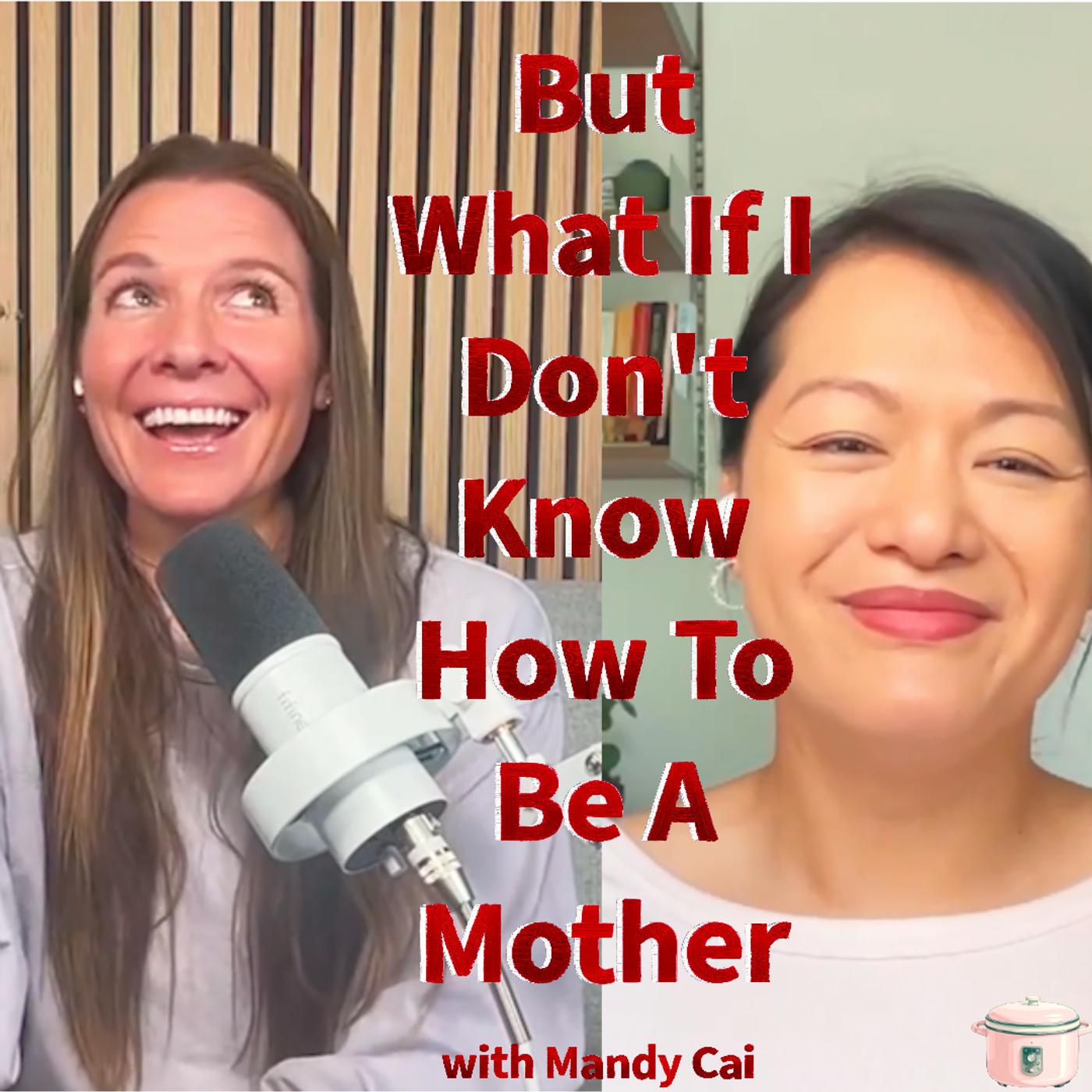
Episode 20: But What If I Don't Know How To Be A Mother with Mandy Cai
Tonight's Episode
We talk to a lot of women who have trouble conceiving, but what about someone whose "fertility trouble" isn't that at all? What about someone whose trouble is what to do when she does get pregnant? You know, like how to be a mother in the first place?
Mandy Cai was born in China and sent to a boarding preschool–yes, that is a weird phrase to see typed for most of us–from age 2.5 through 7 years. Although it wasn't a form punishment but rather a sign of status at the time that a couple could afford to send their child to such a school, it definitely did some damage to its student body...at least to Mandy.
Not having any idea what having a mother looked or felt like during those formative years led to coping mechanisms she'd have to reckon with throughout life (addiction), and as mentioned, it really reared its ugly head when it was time for her to become a mother herself. What did that even MEAN?
Mandy Cai's story is unique in some ways, but also not for a lot of us who don't grow up with a clear source of what it means to be a parent.
Now a certified birth coach and owner of The New School of Motherhood, she aims to help women like her feel empowered and as ready as possible during one of the most amazing challenges we face.
For more from Mandy:
https://www.thenewschoolofmotherhood.com/
Instagram: @thenewschoolofmotherhood | @_mandycai
To get in touch with Ashlyne:
Email: [email protected]
https://confessionsofaslowcooker.com
Instagram: @confessionsofaslowcooker | @ashlynehuffblue
This audio and video podcast was produced, edited, and distributed by Small Batch Sound. https://www.smallbactchsound.com
Small Batch Sound: Hey everyone, and welcome back to Confessions of a Slow Cooker. I'm Ashlyn Blue, and today I am delighted to welcome someone all the way from Shanghai. It's 7 p.m. for me, 9 a.m. for her, which is kind of cool when you think about like, I don't know. It's cool to me. Anyway, Mandy Chai is an early motherhood coach, a birth educator, and the host of the new School of Motherhood podcast, which I'm excited to listen to. And while she didn't experience the traditional physical fertility struggles that we often hear about on this show, she did experience something that was quite difficult for her. The identity of becoming a mother. Yes, that might sound fairly universal because it's a huge ident identity shift for a lot of us, ⁓ and one that I was personally like very much ready to take on. But yeah, I'm a product of a safe home. Loving and supporting parents. I'm a product of a safe home, loving and supportive parents, and no traumatizing homegrown dysfunction. Was it perfect? ⁓ no, it never is. But I'm lucky and I realize that. And I also know, and Mandy really knows, that that isn't necessarily always the case. So Mandy, hi. I am really glad you are here. This is a new topic for us on this podcast, and I am pretty sure it's not gonna be the last person to talk about this on there and definitely won't be the last, ⁓ or rather, it definitely won't be new for a lot of women out there listening. No, definitely not. I mean, I feel like it is something that we should speak so much more about, especially because in today's culture. So much of the focus about becoming a parent is really on having a baby instead of the conversation being, am I ready to be a mother? Am I ready to grow into someone who is a mother? And I feel like because this part of the conversation is often missing, it contributes to so much overwhelm. And We feel like as modern women that we're blindsided on the other side of it. Mm-hmm. Mm-hmm. Yes. ⁓ I well, and you said something that caught my attention that we don't talk about it enough. That is a phrase I feel like I hear almost every week from either my own lips or the person I'm talking to. And that is the point of having this podcast around fertility. In fertility isn't just the having of the baby. It's the lead up to the wanting to create the family. It's the pregnancy itself and it's also the after. So this again, I'm very excited about this ⁓ because I I just think, yeah, it's not talked about enough. And like I said, I I didn't really think about it all that much because I have a different background than I know you have. And so when I was thinking about this episode, I was like, I'm really interested to hear Not like in a ooh, this will be like, you know, ⁓ dramatic and whatever, but it's not something I ever considered. And I I I also know that I'm kind of not normal to have like a really, really safe home. So I know that I that you're you're probably more in the ⁓ majority than I am, but that's why we need to talk about it. You know, and and also I think most people don't want to because they don't want to disparage anyone and they're afraid Of you know, of ⁓ of talking about, you know, I grew up in the South and and the ⁓ in the US and it's a lot about keeping things tidy, you know, sweep that under the rug. And this is not to paint it with a broad brush, but it's a lot of like you just don't talk about your family in a in a negative way. it's bad form or something like that. And I'm not saying that I want you to, but I but if it's part of your story, it's part of your story. So Anyway, let's get started. I d I don't even care where you get started. It's it's up to you. It's your story. No, I I love this because I feel like what you said earlier, it made me think about something, which is the fact that I always say that we seem to approach motherhood as if it's just one cookie cutter scenario and we just all go into it and everything's going to look the same. When in fact, actually all of our journeys are different. So the way that we were born impacts all of this, then how we were raised, and then how we were socialized, and then how we conceived, how we birthed, how we experienced postpartum. And all of this, of course, I mean, when you we think about it, you and I, just the two of us sitting here, have drastically different stories. And But we seem to think about this as if, okay, we become a mother and that's it. You know, that we have children and and the everything automatically we all fall in love different and then we're all the same. Yeah. Right. Absolutely. And in your experience, you didn't think that much about it because you had a strong family background. Whereas for me, my story was very different. So I actually my I would say that even though I've probably fall into the majority of not having such strong family relationships. Right. I do have quite a unique story in the sense that I know I read about it. Yeah. So in the sense that I was born in China. When I was two and a half years old, I was sent to a boarding preschool and I lived there until I was seven years old. I don't even know if those exist here in the US. I don't think so. I don't think they exist in China anymore either. I don't I think I think at some point they were like I don't think those are good for kids. Right. And ⁓ yeah, I don't I it's n it's definitely not a common thing here anymore. Okay. and but good. Back then for my parents, it was a common thing. It was a thing. ac it was actually seen as a thing of privilege because you could afford to send your children to these types of care and And I think the interesting thing about that, when I reflect on that part of my story, is that I think culturally speaking, in various different parts of the world, we've normalized a lot of things that we don't even blink an eye at. You know, I know in the US, for example, a lot of women go back to work. Yeah. Two weeks postpartum. And that's the the normaliz the normalization of something that is obviously going to impact The children, the parents, and the overall dynamic. And for me, I guess ⁓ for me growing up, I didn't know that that wasn't normal. I actually didn't understand. And it wasn't until I started telling people about it. And so I grew up, ⁓ my my another part of my story is that I immigrated to Australia with my dad after my parents got divorced, which was probably the more taboo thing of that time and that place for divorce to happen. But were you when that happened? I was I actually don't remember when my parents divorced because I was at boarding preschool. So at some point while I was before seven, at some point they got divorced and I moved to Australia with my dad. And my dad had two sisters living in in Australia. And so Anyway, so it wasn't until I started telling people when people started obviously asking questions, where is your mom? Like, my mom's not here, my mom's in China. ⁓ and then they started asking like pet like friends, parents would ask me more, and then I started talking about it a little more. And I was surprised that other people were surprised. And I don't think that it really clicked until I was in my teens, until I had enough. context of the world until I developed enough context in the world for me to understand, wow, that was really messed up. That was, you know, like that was that was really not okay. And but even at that point, I still don't think that I fully understood the impact of that. I felt it because I went through many years of struggling a lot with addiction and just a lot of mental health issues as a teen in my early adulthood. And then I had my kids and I was like, wow. Okay, that was way more messed up than I ever, you know, than it ever really, you know, it didn't it didn't sink in because as my my my daughter is six and I think when she started closing in on the age I would have been at. when I was sent to boarding preschool, it started really being so visceral in my experience of understanding, wow, sh like that was crazy. It was crazy that I would just the word you just said boarding preschool. Like those things just don't go together. No, not even school. Yeah. My child is two. I cannot imagine. No, he's gonna yeah, he's over two now. Sending him off right now? ⁓ no. First of all, good luck to whoever takes him. But also, I can't imagine being like, go buddy, like go fly. No. I I absolutely. And it's so funny because I have two little firecrackers too. Like my kids are not then they're wild in the sense that they will fight back. You know, they will verbally they're more verbal than they are physical, but they will fight back with all of their might in terms of their ideas. They will not let things go. And so and I and to be honest, I know exactly where they got that from and it was me. Yeah. and so and so it it it's interesting because if we think about you know, what we understand. As trauma, you know, there's a lot of conversation around trauma, and I love and appreciate all of that. But if we think about the intersection of childhood development and what we know about trauma. The reason why I was so disconnected as a teen and as a young adult and maybe even through, you know, a a big portion of my, you know, twenties was that I was carrying a lot of trauma from those early developmental years where I really feel like what I learned was to shut myself down. I had to in order for me to be able to cope in that environment of being in a boarding preschool. I mean, we can just imagine, right? Even just one on one with a with with with myself and my kids, it's so hard to hold space and to navigate those those intense emotions, right? Right. And then I was and and because of that, I could see, you know, I could see my understanding of trauma and having worked on myself so for so many years, and then being able to kind of see, ⁓ at These developmental stages, these are the things that's supposed to happen, you know. I don't know about you, but for me, my kids were very much like, okay, they start to walk and they start to eat solid food, and it's very cute. Like these are the kind of like cute little milestones. Yeah. What is really not cute is when they start getting angry. Yeah. You know, like. That is also something that I feel like is is a developmental thing where suddenly they this this emotion kicks in. The intensity of jealousy kicks in, the emotion of of frustration kicks in. And in them expressing themselves so fully. We're so uncomfortable with that as a society, right? Anything that has that anything that is not joy, gratitude, you know, appreciation, politeness, anything outside of that is like so constricting for us to experience, to be on the other side of, let alone feel for ourselves. Mm-hmm. And I really believe that when I was growing up in in the boarding preschool, there was no room. There's no room for emotions in in any kind of way, right? There's no she didn't have a parent or two. Right. Right. Right. So like and it's like your teacher, like it's really hard to wanna express or feel comfortable 'cause what you want is at that age is not really, you know Or or like should I is not crossing your mind. No. Just doing it. But if you feel like you can't R. ⁓ my gosh, I'm starting to talk like you. I I told her before we started everybody how excited I was about her voice. I'm going to try to stick to my own accent. I just love it. Anyway, and I was ⁓ Harry Potter was on before this, so you know, just all these other accents in my head. ⁓ but yeah, you you if you don't feel like it's it's acceptable. Then you're not going to because you need to stay in line. You know, you learn pretty quickly if it's not the way. And then with your parents, if especially if they are, you know, open minded and whatnot, they might not want you to do it in public as much. You know, that might make you feel uncomfortable. But we try, at least at home, my husband and I, to be more like work it out. Work it out it with your own s in your own system because us coming either to rescue you from this or cutting it off is not gonna teach you anything. You're gonna have to like calm yourself a little bit, you know? ⁓ so we'll just let you do that over there and we'll be over here and come back when you're ready. And they apparently do that at at his preschool too. They just say, We just let him do it I'm like, good, go for it. Right. Right. Right. And and that's the thing, right? And and it's so interesting because when I look at my my son is three and a half. He th both my kids are extremely articulate. They're very good at expressing themselves. So I'm able to ask them a lot of questions and they're able to tell me a lot of answers where I'm like, ⁓ okay. I understand their world a lot. And with my son, it's so interesting because he, even at the age of three, he only started going to preschool this year. But he's very much like he understands. I go like cause sometimes he he's he does things that quite naughty, you know, and and and then I asked him, I go, Do you do that at school? And he goes, No. And I go, why don't you do that at school? He goes And y and then he goes, Because we're not allowed to. Or he goes, because I don't feel comforta One of the examples is actually sometimes he he has this he's like very creative and sometimes it's funny, but I feel like it shouldn't be encouraged because he says funny stuff that's kind of Bordering on very inappropriate. And it's so funny. But it is quite funny. So like his latest thing is that whenever he gets mad, he's he in Chinese he says big smelly. Like you're a big smelly. And does he do it with a face? Yeah, with a face. No, like like like with real heart. Like he's like passionate about it. Yeah. and anyway, and he he and he's just You know, and he just like points his finger directly at people's faces and he's like, You're a big smelly. And I go, Okay, do you say that to your teachers? And he goes, No, I'm afraid. You know, and yeah, he says he's afraid. And and so, you know, it it's interesting because I feel like even at such a young age, he's so aware of when he has that safe space to fully express. Express his emotions. And I do see it as a very emotional thing because when he does say things like that, he's not just being cheeky. Like I mean, he does also say it when he's being cheeky, but he also says it when he's just legitimately very angry or upset about something. And as a result of that, I could also see how wow. At such a young age, they actually have the awareness to know when is an appropriate space for them to really let out their emotion or for them to hold it in and keep it for someone like me. I'm very much the safe emotional space in our in our home. ⁓ you know, and w a and and and wait for that. You know, and it's also interesting because I talk to my daughter. My daughter takes out a lot of her things on her brother. And I also believe that it's a safety thing. Because I can do this. I I don't have to worry about this. I don't have to worry about him not liking me or worry about him doing anything to me that's going to You know, like I think even with us, she holds back a little bit because she knows that we're going to talk to her about it and that's uncomfortable. Right. Like she she she doesn't she doesn't want to have the uncomfortable conversation. The amount of calculation is amazing. I know. And I like and I'm I'm sure it's not Yeah. I'm sure it's not just my kids because I've observed it in some other children too. And so I observe it in my nephews. My son's only two, so I can only, you know, use right that harp ⁓ high of a bar in terms of his age, but I have a seven, six, and five nephews. And then the last one's two. But seeing them in seven, six and five, like right next to each other, I can see how things shift really quickly because I'm still seeing the the younger year, you know, kind of figuring ⁓ his little thing out. So yeah, I I I totally agree. It's it's kind of weird how quickly that one year changes everything in terms of their perception of it and and just how their vocabulary and how to explain it. Right. Right. Yeah, absolutely. And so when I when I look at kids, especially in relation to this, then I really go, Okay, wow. But there are actually a lot of us out there, and I'm not just talking about myself, and I know I have quite an extreme kind of story. Yeah. But when I think about so many of my friends who and I would say I have more friends than not who don't have the type of relationship with their parents where as an adult, as a parent, as a new parent, would call their mom or their dad and go, Hey, I'm having this problem right now. Can you help me? I don't know about you. But most of the people I know, most of the women I know don't have that type of relationship with their parents. Whether it is here in Shanghai and through expats of ⁓ you know, many different cultures. It's such a melting pot of different cultures. I would say, but I mean, to be honest, if you're probably an expat, you're probably also an expat for a reason, which is, you know, you want to to go outside your comfort zone because maybe home wasn't so comfortable, right? Yeah. ⁓ but also if I look back at home when and I consider Australia to be home because that's where I feel like most of my identity and most of my safety ⁓ kind of came. Like China before I left was not safe for me. So ho I I it's it's hard for me to call China home, even though I've lived here for so many years now. But I still refer to Australia as home because that felt more safe, you know? ⁓ but anyway, it's it's it's interesting to look at because even a lot of the women that I work with and I my clients are are from the US, from France, from Australia. I mean, it's kind of really like a big, big mishmash of of of different places. And so many of the the women that I talk to, they're they don't trust their parents. In that way of, hey, I'm navigating this really hard thing with my partner after the baby's here. Can I call my mum or my dad for help? You know, that that those conversations aren't there. And yeah. And so I'm just circling back here because of what you said about it wasn't really something that you even thought about. But it's very much a very real reality that we don't start off. I talked to my parents right before I came here to the studio. So both of them, they called me and they were like, We just wanted to say hi. Right, right. No, I mean, and and by the way, that's it's not always just we want to say hi too. They were there in the worst of the worst moments of my divorce. They were there and I'm remarried, I don't know, but like ten years ago, and they were there during all of their fertility stuff. And I do know people here in the US who are I don't know if it's because of the South or or what, but like I live in Colorado, which is a little bit more I would say, just open minded about certain things. And one of those would be sp religion, it's a little bit more like you do you, ⁓ whereas at ⁓ it's more cultural back where I grew up in Nashville, Tennessee. And then ⁓ same thing with fertility. It like they have fertility clinics, but like in Denver, Colorado, that's like the like the flagship. place of of fertility, you know, so it's like, you got fertility, cool, you got, but it's not nearly as mainstream in the South. And so I've had people say, I haven't told my parents about this. And I'm like, what? You know, like I they they were like, what? but yeah, because I I was like my mom was like, I think you need to do IVF. And I was like, not yet, mom. You know, so like the they've been in the process since the beginning. But So it it thro blows my mind, but I also am not an idiot. Like I just can't imagine not having that support system and I hate it for everyone who does not, but I know I can't I can't change that. No, but I mean it it's it's it's so important to articulate that because I think that a big reason as to why women struggle so much when they enter motherhood is because. We just assume that the way that we have been is going to just work for after. And I think the more independent you are, the more of a struggle this is going to be. Because, you know, at least in my experience, I really naively thought that. I mean, I knew that my life was going to change. I kept saying to my husband when I was first pregnant, you know, in a in a very kind of salty way, you know, saying to him, Your life isn't gonna change, but mine's gonna change so much. ⁓ but I really had no idea, had no understanding of exactly in what way it needed to change. I thought it was going to change in the way that I was going to have a baby. And that I needed to take care of someone. Right. What I didn't understand was going to change was that I was going to have to get really comfortable with interconnectedness, with attachment, with intimacy, with physical, emotional, and mental intimacy, you know. I didn't understand that had To grow a lot, to become the mom that I wanted to be. I didn't understand exactly how much I needed to grow. I thought it was just okay, if I learned to do the caretaking things, you know, if I read the books, if I did my research and and and most certainly I did try to go that way. It would just come but it didn't but it didn't really do that much to help with my anxiety or my confidence. You know, the thing that I learned about having confidence is first of all, if you have that as a model, if you grew up around women or parents who We're just there, you know. I I think the thing is is is that, you know, I don't know if you know Erica Commissar, but she is a psych she's this I love her work because I think that she is someone that is talking about a lot of really hard things. I think she's based in New York and she basically talks about ⁓ the importance of the first three years for for children. She talks a lot about attachment. And one of the things that she says is that In order to have emotional attachment, you need to have physical attachment first. You can't have you can't have that kind of emotional intimacy if you don't have that physical intimacy first. And I think actually she might I think the word she might ⁓ actually I think the words that she uses is actually presence, maybe. Okay. ⁓ like emotional if if you want to have emotional presence, you have to have physical presence. I think that's how she articulates it. Yeah, yeah. ⁓ and to me, I'm like, well, that makes a lot of sense. Mm-hmm. But for me, it was really like I didn't understand so much of that. I was so hyper independent before I came into motherhood. I traveled alone. Well, you had to be, Mandy. Like Right. If I'm thinking of this just this quote, regardless of which words are are the right ones or the whatever, you did not have the physical presence of your family. So how in the world are you supposed to have an emotional connection with them and then like go back into that? So how would that even make sense to you? Of course you're gonna be like the only alternative would be like weirdly codependent on everybody else, you know like and you're one or the other. I'm I'm more of an independent person. Ironically, even though I'm like obsessed with my family. But ⁓ yeah, I mean of course you are. I think there's a difference though, because I think that if we think about children and how when children are safe, they can also be very independent when they are outside of the home, right? There's force independence and then then I think there's intrinsic natural independence that comes from a healthy place of growth. And I think those two are very different things, right? Yeah, I would say my independence was was born out of confidence that I was in a safe place to be myself at home and away from home. And I can see I can say that I've seen that already with my child. He will play by himself for however long and then he'll come in and grab my hand and say, poi, poi, poi. So we're gonna go and play. And I yeah, I can see that he doesn't have to have me at every moment or his dad, but he does like us to be around sometimes too. So I feel like that's maybe like the most primitive version of independent but connected. Right. Right. I mean, I see it in my daughter as well. Like my daughter was the clingiest baby. But and I think really, you know, I believe that all our like our children all come to teach us really deep lessons about ourselves. Right. You know, they they I don't necessarily think that I have as much to teach my kids other than they are here to show me what I need to grow or how I need to develop as a person. It's kinda like circular at that point. It is, and then something back. Right. And hopefully as a result of me stepping into those lessons and and me growing as a result of it, I can then model something that's very different for them, right? And and I think the the the thing that I want to circle back on here is that when I think about so much of womanhood now is about independence. And I don't necessarily always think it comes from this healthy place that you speak of. Yeah. Yeah. Yeah. Because we the world culturally, especially I and I would say that maybe not the world, but well, actually no, the world, but in different ways. I grew up more with a westernized background. Right. So I'll speak from that perspective. Growing up as a child, as a teen. All we wanted to do, I remember, you know, in in towards the end of primary school, in high school, our aspirations were to be independent women. That was the narrative. That was the common narrative for us, you know. That was in all of the preteen magazines. Yeah. You know, all of the aspirations were things outside of the family. And Then of course, you know, our pursuit of so many decisions, our careers, how we built our lives, the way we travel, the way we take in information, the stories we want to hear, the books we read. I mean, I st I I also kind of grew up with the idea of, you know, being a girl boss. And, you know, it it was that was really my my and I remember when my family would make suggestions of like, ⁓ you know, it would be a good idea for t for you to find a boyfriend who has a ⁓ you know, like a stable family and and to come from an affluent background so that you can build a family. I would be insulted. I was so insulted at the insinuation that I couldn't provide for myself, you know that I was like, I'm a smart, intelligent person. Like, how dare you reduce me to family life? The pursuit of that should not be that. It should be to find someone else to do it for you. Yeah. Right. And and and and no, but I mean I was so disconnected from this idea of family, really. Also not not just I don't think it was just because of my upbringing. I'm sure that had a little bit to do with it too, but it was also because from a cultural narrative perspective. Because I wasn't so connected to my family, and I think this is what happens when you're not connected to your family, is you look to your friends, you look to social media, you look to the whatever you see on TV, right? And like Or in movies and yeah. Movies and TV. And I mean I grew up with with with with all of these teen stories like the OC and and mm Dawson's Creek and you know, like And and and and or like even watching Friends Friends was on every single day in Australia. I don't know if people know this, but like it was ⁓ I Yeah. I mean the new episodes would come on every week, but then every day there was a rerun. and anyway, and my and my point of saying this is when your family isn't supportive, when you don't ⁓ when you don't feel safe within the family unit. Your point of reference becomes why like wider culture, your community and wider culture. And it sounds like it would possibly all also, like you said, a mishmash earlier. Like it could be a mishmash of all those things and it might not be as clear. Whereas if you have one family unit, it's like that for good or bad, if the family unit is something you want to emulate or something you don't want to, at least it's one thing. You're like, Don't do this or do do this. It's like it sounds like the cultural part could actually be even more confusing because it's kind of like ⁓ you know, putting all your food together and then trying to like, you know, figure out like what did I just eat, you know? Right. Totally. And I think that's where we're at with a lot of women entering motherhood, at least from the work that I've done with women, is that that's what I've seen. There is a very big difference between women who like yourselves have ⁓ who like yourself have had an extremely strong family background of feeling safe, of being able to call your parents for a chit-chat, you know? And there is a very big difference. And something that I've been thinking about in my personal life is There is a lot of conversation on the internet. And and I'm very internet oriented because I I grew up in a time where as a teen that was like ⁓ my space and being just just just being online pretty much from from from being a teenager, you know? So I'm very oriented with the conversations that happen online. And I'm also I pay attention to it too because of the work that I do. Because I've also been that person at three o'clock in the morning because my my my child isn't sleeping and I'm just scrolling on Instagram out of habit, but also because I'm looking for comfort. And in those moments where I'm looking for comfort. I remember seeing all these messages about the mental load, about how unfair it is for mothers to do all of these things, such as care and nurture. And I remember that influencing my state of mind, my already very fragile state of mind, and really thinking to myself, Yeah, life is so unfair for me as a woman, right? And the deeper that I've gone in my journey of really trying to have a better experience, like it's it's really like my goal is how can I have the best experience possible as a mom? I want to be a great mom, but I don't want to lose myself as I am learning to be a great mom. I want to be more of myself as I'm learning to be a great mom. And as I navigate and go deeper into this journey of understanding and and practicing what that means for me, I'm seeing how unhealthy these narratives are. And I say this because First of all, I don't think that if you if if we grew up and we didn't have great examples of parenthood being modeled to us, we already first of all don't know what that's supposed to be because we don't have the lived experience and we don't have reference points and we don't have people we can call to just ask questions. So we're already at such a deficit. in terms of that lack of support that's all over social media. And it's not just from the government or society. Like it's it it it starts with with with with the micro, you know? And so we're already at a deficit with that. Then when I look dive even deeper into that, I go, okay, so I don't I don't have that. That's not my baseline. And then I go, okay. I spent most of my life trying to be some version of a girl boss, whatever that meant for me at that particular given time. And I never looked at motherhood as something I needed to prepare for. Never never thought that it was important enough. Mm-hmm. This is not to say that becoming a mom wasn't important to me. You know, this is totally what you're saying. Yeah. I'm just saying that like I never try to understand what it meant to become a mom. I never asked any questions. It was just like my friends would start my friends started having babies. And it was just like, ⁓ okay, cute. I don't know if I want to hold the baby. I don't know if I trust myself. But I never asked. I never sat with the importance of how important it is as a whole to even just be like, What has that experience been like for you? How did you grow as a person through it? What were some of the best things you learned? What were some of the things that you wish to have learned earlier? What are some of the things you're hoping to learn for the future? I never asked any of those questions because so much of my my internal and external life was oriented towards something else. And And when I look at the work that I do with the woman that I work with, so much of the conversation is in understanding and making meaning out of motherhood for them specifically. So really diving in deeper into how can you become the version of the mom you want to be? And really having nuanced explorations around that. Because it's it's it's also, you know, really insane to me that we literally require certification and education for almost everything in the world. But we don't have that for motherhood or for fatherhood. When literally if we if we stop procreating, we would have no human beings. You know, so this doesn't make sense to me. The the the the lack of education, the lack of preparation that we have for us to come into this journey and feel empowered and to feel like, wow, this isn't taking away from my life. This is contributing in ways that is so much more powerful than I can ever imagine. We don't even have that conversation, you know, and yeah yeah. That's I'm gonna end here for for for for for this part of the ramble. ⁓ no, no, no, no, no. You are fine, lady. Two things. While you were talking about that, like yeah, you don't have to be qualified. I mean, there's no qualification to becoming a parent. It's it's a biological thing, or for me, it's a lab thing. And ⁓ and I was thinking, Okay, I was just trying to like, okay, so but I didn't know how to be a mom until I became one either. Like even even so with all this other stuff, I didn't I didn't really think about it either. I knew I wanted to be one and I I have these reference points of my mom, my aunt, aunts, I have lots of aunts, and I have lots of cousins and I was really ⁓ aware in high school especially, but also middle school. I as the oldest child, I feel like I was also very aware of ⁓ how other oldest children were or like my friend's older siblings were and so I and my su my son, no. ⁓ this Freudian slip, my brother is nine years younger than I am. So I sort of was a like a junior mom to him. My mom was like, can you help with this or whatever? So I think I got and I have like thirty cousins, like ⁓ so much practice with a lot of people around me and a lot of their parents, I wasn't really paying attention explicitly to how to be a mother. But it probably seeped in. So by the time I got to that point, it made sense. But the second thing that popped into my head was I had a hard time getting pregnant and I didn't get pregnant for years and years. And then I had to do the IVF thing. And I I wonder, I was talking to somebody yesterday, 'cause they were like, ⁓ she has she has a grandchild who's the same age as my son. And she was like, It's so different. It's so different. You're so like, I just dropped every drop everything I'm doing. I don't have that much else to do. when I'm with my grandchild versus when I was a ⁓ a parent to the the child's mother, I was all over the place everywhere, like just trying, you know, hand over here, hand back here, thumb up there, you know, just like doing it all. And I was like, I kind of feel that way, actually. I feel I don't feel like that. I feel like I'm the present one. And I don't know if that's because I'm forty or what. Like I have no idea. Or maybe it's because the intentionality that I had to put into it. Like I could have given up, I guess, if I was like, I don't know if I really want to be a mom that badly. But I really did. And ⁓ it through the fertility process, I was so like I think I just I really thought it through, even though I wasn't thinking it through. All I was trying to do was become a mom. Like you said, like you just think about the conception part. ⁓ but I think that gave me the time and the space to actually figure it out internally, even if it wasn't up here. So by the time I got there, that didn't mean I knew what I was doing. I was psychopants for the first while because I was, you know, sleep depresspartum, I think, needs to be more normalized. I am all about putting that out there because you're just not yourself. No matter what kind of person you are, if you're waiting to for that mother thing to kick in besides keeping them literally alive, literally alive, then you're not gonna find it in those first like five months, you know. That's not you. Like let it go. Right after that. When things settle, then yeah, you can start to be like, okay, I have all of my toes on the ground, you know. I don't feel like I'm just falling over. But anyway, I digress. I digress. I was just thinking about that all that when you were talking. Right. I I love that you bring this up because I feel like there's something so I got certified as a birth educator because I had an amazing birth with my daughter Ella. ⁓ another story for another day. Love that. I love when people have amazing stories though. Because a lot of people don't. ⁓ No, I had an I had an incredible birth. And I really believe that if it wasn't because I birthed her in this way, I probably would have struggled even more in postpartum and in my journey of motherhood. I definitely don't think I would be here where I am today. Anyway, so I got certified as a birth educator. And Something that I used to say to women who would come to my classes was that, you know, there's a lot of fear about becoming unhinged in the process of birth. Yeah. And I would always say that that's this is the best time for you to become unhinged. If there was ever a time. in your life to be unhinged and for there to be a legitimate reason, birth is it. And I think the second point of that is also postpartum. Right? Like I think as women, we're so used to keeping things together. And I actually think maybe we should agree. We need to fray a little bit more and be okay with that. Because We being calm all the time is not a realistic thing that's going to happen. If you're calm on the outside, that doesn't mean you're calm underneath. Right. But it's exactly not like a roiling like a vicious ocean underneath. You're just keeping it together and that's not doing you any f any favors at all. No, no, absolutely not. And I think really birth and postpartum are Are such big teachers for us to learn how to just be a bit more real with ourselves. You know, to be a bit more real with ourselves and to be a little bit more real with our partners. You know, like I I don't think that you can get to the level of vulnerability and level of intimacy with your partner unless you let yourself go there, you know, unless you let yourself. Go there and get to the point where you just can't hold things in anymore. And you show your partner the most real version of yourself. And it's uncomfortable. It's super uncomfortable, but it's so necessary in order, I think, for for for partnerships to grow and develop. And that assumes, and we haven't talked about this at all today, but ⁓ your your partner. It has to be safe place too. They have to be a safe place to It's not a container, then feel comfortable doing it. Right. But in my experience, I would have to say that I always mentally knew that my husband was a safe place. If he wasn't, I wouldn't have married him and I wouldn't have made that conscious decision to start a family with him. But having said that, I didn't know as a person how to lean into and trust that safety. I didn't know how to do that. So you didn't but you don't know what to do with it necessarily. Yes. So it that became really and it's still a work in progress. You know, which makes sense given my upbringing, right? Given my upbringing, it makes sense. Yeah. Totally makes sense. Totally makes sense. But it was like I just had a really steep learning curve of and this is also something that I see, especially with women like myself, maybe not necessarily with the same childhood upbringing, but but but similar patterns of being hyper independent, extremely capable. extremely self-sufficient and resourceful. A lot of the women that I work with have these kind of traits. And they have these kind of traits. And I have these kind of traits because somewhere along the line, I learned that I have to have my own back. I can't rely on anyone else because no one else is reliable. And so as a result of that, even when I made that conscious decision to marry my husband, to ⁓ start a family with him. And he's very sweet, you know, he's a very sweet man that is always trying. But I also know, if I'm really radically honest with myself, there were so many moments in postpartum that because I didn't have that security within myself, I didn't know how to not just ask for help, but I did also didn't know how to accept it. I didn't know how to let him do things his way because it wasn't my way. And I needed things to be in my control and in my way because that was the only way that I knew how to feel safe. And so so much of my journey in the last six years has been to really look at all of these different aspects of ways I needed to grow. And learning to feel safe is very much the necessary in terms of growth. And so I really believe that, ⁓ and I'll tell a funny story in relation to this. so I want to talk a little bit about how our development gets stagnated. So I think physically most of us will just continue growing physically, right? Mm-hmm. Mm-hmm. I would even say mentally, we would usually kind of develop, but I think Emotionally is where we stagnate the most and we can't tell as adults. And the reason why I came to this conclusion is because I went to a tantrum class with my husband. ⁓ Okay. I didn't know these existed. Yeah, they do. They do. I was learning. I thought I would get on top of things and learn all about tantrums before they they occurred. Anyway, and we'll sit in this class. They're for children. They're for children. They're for children. Okay. Like they have those things where you like go and throw dishes at stuff, you know, like to get your anger out. I thought this was for adults, and I was like, I did not know this existed. No, no, no, no, no. But now that you say that, I think it should probably exist. It should, yeah. But I went to this Yeah, so I went to this class and I remember sitting there and the the teacher was describing she was describing the onset of a tantrum, how to kind of, you there was like a, I think it was like a visual of a green, yellow, red light and what happens in the brain during a tantrum. And I remember sitting there and and and then I was like just taking it and I was like, okay, yeah, like this makes sense. And then my husband looks at me and he goes, That's you. And I like, and and then I literally and I sat there and I went, It is me. I was like, it is me. I do do that. And I just remember sitting there for the rest of the class and I don't even know if I took anything in a after that point, but I just remember I was like, wow, I threw tantrums. And and then then I think later on I realized I was like, wow, I threw tantrums with my husband. And and I think it was sorry. And and yeah, it was definitely like I'm Sorry about that. Yeah, yeah. But also at the same time, I think it was proof that he was my safe space. He was my safe space for me to finally kind of let out that that those emotions. And of course, after that, I did learn a lot more about myself and and how to emotionally grow. Because I think that when I s my my emotional development started really stagnating, when Especially When I went to boarding preschool. I mean that makes sense, right? Like and and so I think from the age of like two and a half until seven, I was just emotionally. All the sticky stuff. All the sticky stuff happens around that age. And and but but you know, honestly, I also feel like when I look at a lot of my friends. And a lot of my friends are on very deep healing journeys. I would say that it's it's the same pattern that I am recognizing, you know, that we just there's a lot of us that needs to grow a lot more than we expected in order to become the mothers and fathers we want to be. And and I think that can be really confronting when We enter motherhood and we don't know about it. Yeah. Because, you know, when when I think about all the the struggles that that we have as couples and as individuals of how vulnerable we need to be in terms of our emotions, especially in in in learning how to be vulnerable with each other, learning how to trust that our partners are safe. Yeah. Learning how to then hold space for our children as they're navigating the intensity of of growing up. Yeah. So much of that requires for us to be mature and requires for us to access a level of ourselves that may require a lot of growing into. Yeah. And I will say, so I have a safe I had a safe home growing up. But that doesn't mean I didn't experience any trauma. ⁓ I I had a trauma when was nineteen that really rocked my world. and I just ⁓ did a full ⁓ almost a full year of ⁓ cognitive post traumatic therapy. C C whatever. CPT I think. And I I graduated in ⁓ December, right before Christmas. It was lovely. But I'm still talking about it with my psychiatrist. I talked to him yesterday about it. So it's like I don't have the the the parental thing that you're talking about. I have that and I do have somebody to talk to about it. But the funny thing is, and it's not funny, not ha ha ha funny, at all, actually. ⁓ it is there I did it again. I started talking like like sort of talking like you. You're so much better at your own voice. ⁓ but when this trauma happened to me, I didn't tell my family because I was so ashamed by what what occurred that I was afraid to say something not because they weren't safe with the information, but I was just trying to be good ⁓ good person and twenty years go by and I'm thinking what happened to me ⁓ was my fault. And I'm just getting over that at forty. ⁓ over twenty years later. And so I brought that's something I have had to work on for me with you know within myself that has affected my marriage, not in like a apples to apples way. but that I know it's going to affect I I realized it was going to affect how I parented at some point, maybe not at the two year old stage, but as time went on, I knew that this was going to rear its ugly head in one way or another. And so I I'm I'm so supportive of Everyone cleaning up their their in their internal household because it's not just about where you started. Sometimes it's something that happens in the middle. ⁓ you know, I having gone through a divorce as well, I had to clean that part up too. I had to own my part of that relationship and ⁓ how and you know, and and deal with the fallout of thinking something failed, what's wrong with me. I didn't see that coming because I grew up with a very safe family and my parents have been married for almost forty four years. You know, like it it didn't occur to me. So even when you have it, you still it doesn't mean you're guaranteed to have it have it, you know? And so that's not to say I just want to make sure I am perfectly honest about like I have a lot of great things with my family, but at the same time I still do have cleanup to do. So I just wouldn't want anyone to Out there, if you've not heard anything about my story yet, to think, wow, she's just got it. Like, no, I don't. This is just one thing I haven't struggled with, ⁓ that you're talking about. Right. Right. And and and I think that's also I thank you for bringing that up because I think that's also so important for us to remember and talk about is that we all experience hardship in one form or or another. And sometimes it could even be in the workplace of having a really terrible boss that makes you feel extremely unsafe. And and it's really, you know, so a lot of the times when I talk about my my my work with my clients now, is there's essentially three different pillars that I I believe that everybody should really work on. The first thing is safety. And safety is not just physical safety, like I am in a safe home. And and of course, like that's a fundamental thing that we need. But it's also mental and emotional safety. A lot of the times we're missing that. And when we don't have that as a foundation, it impacts everything else. Especially if you don't know you don't have it. Especially if you don't know that you don't have it. And actually ⁓ just a few days ago I was working with a client. Who got diagnosed with gestational diabetes. And so she's monitoring her glucose levels. Yeah. And it was so interesting to talk to her because she was saying that there were a couple of times where her glucose spiked and she didn't really know why. She was like, But I was eating the right things and I sat to her and I go, Well, what else was happening that day? She was, I don't think it was anything stressful. And then we, of course, went deeper into it. Yeah. And it was something that was stressful to her body mentally, because she has such a high tolerance of stress in her mind, she didn't logically recognize. Yeah. She like, I'm fine, I've done this before, you know, it this is not a stressful experience. But her body. was showing her that that was not what she was feeling. You know, and if we think about how much as women we've been conditioned to go against ourselves and what we want, what we need. It's really, you know, it's really quite a lot. And that's not Well, if you think of just periods alone, like you just deal because it happens every month, you know, and everybody's got a different one. I was talking to somebody a couple of weeks ago, and she said she just figured that having the most painful periods and not being able to get off the couch was normal for her. It wasn't necessarily normal for everybody, but the doctors basically said as much when she was young. And so she just like learned to deal with that. So if you take that and you ⁓ superimpose it on on any other stressful or physical thing, then you're like, well, I've done I've I've done worse, you know, or I've handled worse. And that can be the same for the mental side, the emotional side. If you have a high tolerance, then you don't like your body gets used to it and then eventually it sh it tells you, but you might not know what the communication is even for at that point. You know? Right. I think actually to be honest, I feel like we've also normalized a lot of things that are not honestly great models of health. Right. Like like we don't it the period having periods as an examp using periods using periods as an example. It's kind of like we just look to other people who are also experiencing pain. And we go, ⁓ my pain is normal. And so therefore I must be okay. Instead of going, who isn't experiencing pain for periods and what are they doing in terms of mental, physical, and emotional health? W our thinking doesn't happen like that now. Right. Right. We're looking for confirmation. We're looking for confirmation that we're normal. Yes. Yes. Yes, we're looking for confirmation that we're normal instead of looking towards I don't know. I I read this article recently on Substack that I'll email to you because I think it's wonderful. And it talks about ⁓ the the imagination gap, I think is what it was called. Mm-hmm. And she basically talks about how all of the existing structures that we know came from imagination. But right now we live in a society where we don't imagine enough and we just think imagination is just for the the artists, for the poets, for all of these things just to do with art the arts, but not to do with real life. Or the people who have luxury to do so. You've got time. You've got you know ⁓ it would be so great if I could play a little bit or or ⁓ Yeah, like have a hobby must be nice, you know. Right, right. Absolutely. And so yeah, so it it it it it's really about, you know, we have to go back into ourselves to really truly understand what matters to us, what is valuable to us, and then we have to learn to lean into our imagination of understanding what what kind of life do we really want to be living. Yeah. And then that brings me to the second part of what I usually work on with my women. The first thing is safety, finding different ways to feel mentally, emotionally, and physically safe. Then the second thing is really about learning to have ⁓ support. And this is, and when I say support, I don't just mean like, you know, let's all just wait for the world to change and wait for the government to do their thing. I really mean like In what ways can I learn to ask for and to say yes to the help that's being offered? I really mean it like that. Right. Because that's really it's it's hard. It sounds really simple as a concept, but it's really hard to practice. It's hard. And the third Especially if you're independent. Right. Right. Really hard. 'Cause it makes you feel like you're like you got this. Like why do I need help? I got this. Right. Right. And the third thing is what ties back into what I'm saying about imagination is to really learn and understand that we have agency. I hear this all the time. Things are easier said than done. I don't really have a choice. But really we do. Really we do. And I use this as somewhat of an extreme example to illustrate my point. But I think it's important. So I struggled a lot with substance abuse. And to me, for a long time, that was also my excuse. I had a terrible childhood. I don't have people that I can count on to support me. This is how I feel good and how I feel safe. I don't have a choice. I don't have a choice. But actually I did. Right. Yeah. I needed to find the motivation. I needed to understand what I was working towards. I needed to see a greater purpose. I needed to understand what that meant for me. Not what sobriety meant for other people, but what it meant for me. I needed to use all of these things that I'm talking about. I really needed to find safety. in all of these tiny little bits and pieces and it was messy. I needed to understand that I could ask for support. I could go to my aunts. I could ask. There were people I could count on. And I think very slowly over time when we start to understand exactly how much choice we have, and we take responsibility for those choices, and we lean into the discomfort of wow, this is probably gonna feel very uncomfortable and probably even really shitty for a while. Yeah. But I know what I'm working towards. Mm-hmm. And I use this other example that's less dramatic and less extreme. But just imagine if you, your goal was to become the CEO of a company. And you have no other way to start other than just being an intern. Like, you know, that's the only thing that's available out there. But you really know you want it. You you really believe that you can do it. You know that you might not be there right now, but you're willing to do the hard work to get there someday. Right. Think about that in terms of perspective, in terms of your motivation for getting people coffee, for doing the mundane tasks that nobody else wants to do, versus going. I don't know. I just want to just try to be in this company. Right. Like it's it's it's very different. You're being driven by very different things. Or another great example of this is if your parents said, Go do this internship. And in your mind you're like, ⁓ well, I kind of like this company. Yeah. And you go, and how much more ⁓ unenjoyable would your day be as an intern if you didn't have that differentiation of mindset? Yeah. Yeah. Yeah. Went on a few times. I also would say ⁓ no, it's okay. I ⁓ I also ⁓ and this was n this was ⁓ not so much with motherhood, but ⁓ back post my divorce I sort of became a little bit of a poster child for other people who knew me ⁓ at you know at that time being like I'm about to get through a divorce and or not get through, I'm about to start one And I have a question, should it should I even do it? And I I would always sort like if you're not in the right spot, ⁓ and you know you're not, but you're afraid to move and you're afraid to make a choice that is ⁓ potentially gonna like b it does blow up your life. Your life is obliterated. It doesn't matter if you want the divorce or don't want the divorce, it's ⁓ it doesn't matter. The life you signed up for promised to have ⁓ built over however many years or months ⁓ depending ⁓ it's gone it's gone and you have to start from scratch and so ⁓ you know an example of one person would be like I don't know what what my life's gonna look like what if I never find anyone again I was like well you know where you are do you want that like you can see that you can see what that is and from the sound of it it doesn't sound like you want to be here long term ⁓ yeah, the The unknown is scary as hell. But at least you have an option to do a few things. One of those is to see where it takes you. And I am living proof that it can take you somewhere pretty great. that didn't mean I felt really good about it up until that point, but I the other thing is, like you said, the agency. All right. So you've got you're out, you're on your own, you know. figurely, literally, what have you after something like that happens, like a divorce. And so now you get to make choices. But if you stay where you don't want to be, the choices have sort of been made to a degree. If you see that there is a ending point, you're just gonna keep bumping up to that ending point. But if you if you put yourself out there, To have a new life, you get to make those choices again. That doesn't mean you're gonna make all the right ones again, but you keep getting to make those. It's it's not preordained. So you got to, yeah, jump a little bit ⁓ to see where you could actually fly or if you could fly. And eventually you will because you'll learn, you know, through through the falls. And but if you never, ever, ever try, you also know where you're gonna stay, you know. And so like you get to choose. Between those two, just the bucket A, bucket B. Right. And I I I wasn't really faced with no one said that to me before I got divorced or anything. But when I was able to look back, I was able to, you know, be like, I I see what I see in your relationship, ⁓ based on what you told me. And it seems pretty clear to me. You know, that doesn't make it easy, but it seems clear, you know. Yeah. And I think we have to normalize the unpredictability ne like the unpredictable nature of life. Right? And I and I also always say this like magic literally happens in the unknown. The best things always happen when you don't know the outcome. Because if you know the outcome, you've done it before. There's nothing there's nothing surprising about it, you know? Which is so interesting because that means you're not necessarily feeling safe. And sometimes Not feeling safe is okay. Like understanding the nuance of safe and safe. And you know that there is a difference. You know, you don't always want to feel familiar. Sometimes you want to feel the safety to be able to jump, the safety to be able to try and get out of your own way. Right. And you don't learn that nuance until you're kind of in it, unfortunately. I think. No, absolutely not. But but I also feel like You know, and I I and I spoke about this on my podcast recently. I feel like as women, we just try really hard not to be bad moms, especially now, because you know, there's so much narrative around like, you know, all the the pressure. Actually I think we should have a bit of pressure in motherhood. Yeah. I I actually think we should because this is the most important thing we're we're we're we can ever do in our lives. You know, we're responsible for so much and and and these little we're shaping human beings, you know, who they are. We should have pressure around that. But the pressure doesn't have to be judgmental pressure. The pressure does be the push to make the decision you truly want to make, not because someone else made it for theirs, but you really want to make the intention. Absolutely. Absolutely. And there's there's differentiation there, you know? Like I think the pressure becomes unhealthy if we keep orienting ourselves towards what society is expecting of us, what our other family members are expecting of us, what our friends are doing, what our partners want. But I do believe there's a truer version of that, which is if we really look inside to understand what our values are, what our what what what is really truly important to us and we anchor ourselves there. I believe that then we can really set our goals to become great moms that doesn't feel like it is a suffocating kind of process because we're conscious about it. It's oriented towards something else. And and and and I'm definitely like, you know, a big questioner of of some of these narratives that that I keep seeing on my Instagram feed, which is a lot of which which is a lot of of of things that I don't necessarily know if it's really helpful. Right. Or necessary. It's sometimes it might not be like a a negative thing, but it like, do you have to do it? ⁓ or is this is this even worth your time or energy or money for that matter. You know, it's it's sometimes you can get caught up in the superficial stuff too. And that does take time out of some of the other more important questions that you, you know, you just get I feel like you just get bombarded by how everyone else does it. And the good question to ask yourself is, is this how I really want to do it? And if I look back, you know, if I look back later, or if my son And daughter look back at me later, is it gonna be something they want to emulate or is it gonna be something they're gonna be like, what? You know, like or is it gonna be neutral? They don't care. Either way. Like there's there are just a lot of questions all over the place. Yeah. But this has been so great. You are so wonderful. I'm so glad to have met you. You're so worldly. I'm like, I feel you know, ⁓ Shanghai to Australia and back again. And I just I I have loved listening to a your story, but also how you help women. ⁓ I definitely want to put all of your information ⁓ in the show notes so that if someone is in a place where they're like, Well, Ashlyn can't help me, ⁓ they but maybe Mandy can. So I I will definitely put all of that in there. And is there anything that you feel like you didn't say that you wanna, you know, not get off your chest, but like ⁓ leave the listeners with ⁓ that you yeah, that you haven't said already? I guess what I want to finish on is that our kids are going to grow up and they're going to become adults who are really going to see us for who we are. And I've spoken a lot about growth in our conversation today. I know that I am growing to become the kind of person my kids will one day grow up and look at and hopefully respect. I know it's a big aspiration, but I want to become that person. Yeah. I'm not saying that I will get there 100%. I don't know, right? But I'm willing to try. I'm willing to do the work. I'm willing to put in the effort to become someone that they look at and hopefully remember with Yeah. Respect and admiration and just, you know, of of being the version of me that at least shows up very honestly. That yeah. That that has a lot of integrity, you know. So I want to just finish on on on that. And I created an experience that is now on my website for women to really understand the mother that they are becoming through the lens of Who do you want your children to remember? What kind of things do you want them to remember about you? And the guided experience is really very much about that. That's wonderful. If you have any questions for me or Mandy, again, everything's in the show notes. It's always in there. Please share this ⁓ episode with somebody who ⁓ really needs it. I don't ask anyone to give me reviews or to, you know. Do any of those those typical things because this is not what the podcast is for. Original, you know, like I would love for it to grow, obviously, because that means it reaches more people. But it's not about the metrics as much as it is about it being sent to someone who could use this episode or another episode on this show to get through something or to overcome something. ⁓ we are all going through something in life at the same time as someone else is going through something else. And ⁓ I'm so thankful that for the people who are willing to come on here and share their harrowing experiences, their wins, and what they're learning along the way. I've got work to do. I'm pretty sure, by the way, to to s to just put a cap on what you said, Mandy. The trying and the showing up to show that you're trying to your kids, I think is everything. From being a someone who has a mother who has shown herself in the try. the trying moments, ⁓ has failed and gotten up again and done it again. That is what I respect most about my mother. And so I feel like you're going to be just fine. the pursuit says a lot about you, you know, and I feel like your children can tell if you give a shit or not. ⁓ and so On that note, I hope you have a great rest of your day since it's just starting. I'm gonna go put my kid down. ⁓ and thank you everyone who's listening. we'll be back next week. And until then, I hope you take care.
 Apple Podcasts
 Spotify
 YouTube
 Castbox
 Castro
 Goodpods
 Podcast Addict
 Moon FM
 Overcast
 Pocket Casts
 Podbean
 Podcast Republic