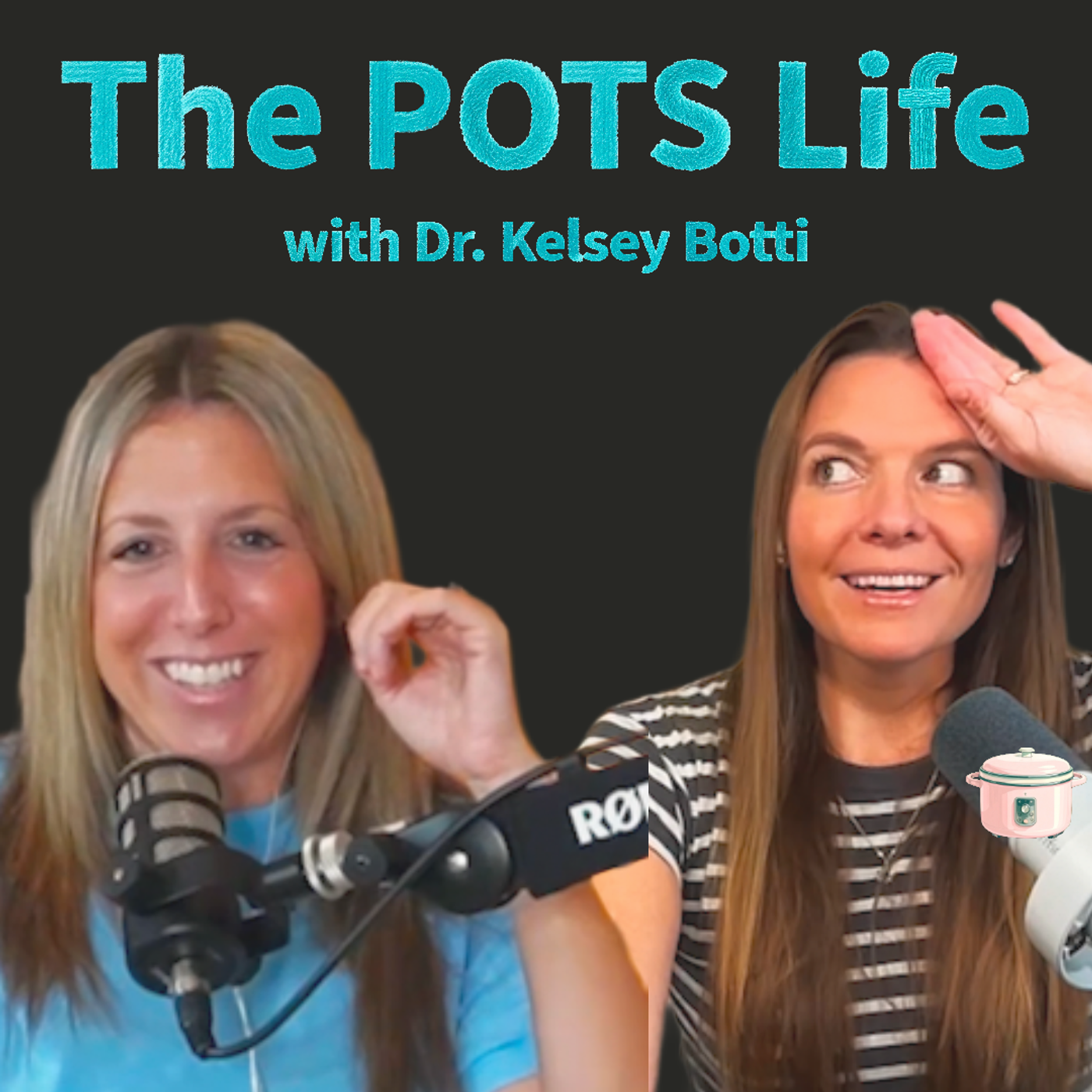
Episode 33: The POTS Life with Dr. Kelsey Botti
Tonight's Episode
What does POTS have to do with fertility? Maybe nothing, maybe everything. For Dr. Kelsey Botti it was part of hers whether she realized it or not (because she didn't realize she HAD it until after her boys were already here).
Listen to Dr. Kelsey talk about her own POTS journey, from learning she had it, to learning how to live with it, to devising her own POTS program to help others! She's lovely. You'll love her.
To get in touch with Dr. Kelsey:
https://www.instagram.com/thepotslife_/
Her Podcast- https://open.spotify.com/show/5TWCuZJVg1cnXpOlrpguGw
The episode referenced-https://open.spotify.com/episode/7qv2ektSABycEoKDPDWJJb?si=ff1047577a3b4a70
To get in touch with Ashlyne:
Instagram: https://www.instagram.com/ashlynehuffblue/
https://www.instagram.com/confessionsofaslowcooker/
Website: https://www.confessionsofaslowcooker.com
Email: [email protected]
This audio and video podcast was produced, edited, and distributed by Small Batch Sound. https://www.smallbatchsound.com
Small Batch Sound: Hey everyone, and welcome back to Confessions of a Slow Cooker. I'm Ashlyne Blue, and today I'm excited to welcome one of my clients. I don't know if you know this, but I edit and produce other people's podcasts for my day job at my company Small Batch Sound. And a part of being a podcast editor and producer is literally listening to every single second, every single syllable of all my clients. So I l I learn a lot. So as I'm listening to my guest today, who is also my client, Dr. Kelsey. But Her podcast is called The Pot's Life. which is really interesting. I had no idea what I was listening to, but now I realize, and that's why I called her. I was like, hey, you have a really good story and a helpful a helpful story to tell my listeners if you'd be willing. So hi. Welcome to the show, Dr. Kelsey. Because I'm gonna botch your name, so I'm just gonna call you Dr. Kelsey. You can just call me Kelsey. That's okay. Okay, okay. so we just started working together recently, and it was like a very I I listened to I think the first episode that I did it was you and your husband, Kale, and you guys were talking about your experience and I thought it was so interesting. I have a friend whose husband has pot, so I have heard of it, but I I don't know anything else. And I would dare guess that a lot of people listening don't either. So can you actually I'm not gonna tell you where start. You're a do you you know what you're doing because you experience this, but you also do this. So tell us about you and we'll take it from there. Yeah, so thanks for having me. I mean, how I feel like when you and I connected that it was just so natural and it was just, you know, both have personal stories and it just flowed so perfectly. So and it was also pretty cool that my first episode that you got to listen to was with my husband because I feel like it helps you're right. Like it was like a biography. I got to listen. Yeah, it was great. Yeah, so I was diagnosed with POTS in twenty twenty one and hindsight looking back, there were all kind of things leading up to it, which includes infertility, but at the time I had no idea. but POTS is stands for postural orthostatic tachycardia syndrome. And basically a short way of saying that is for the most part, not everybody, but typically people that ex have POTS experience when they stand a rapid heartbeat. So a drastic rise in their resting heart rate. So at times after I had my second set, my heart rate was one eighty and it was just, you know, you feel like your heart's beating out your chest. And then you experience these wide range of symptoms that go with that. But, you know, by definition, it's the the increase in heartbeat when you stand. but we as we know it encompasses all sorts of other things and all symptoms with that too. Well as you say we know. We we as an I do not. But you're gonna learn two weeks. Yeah. I'm going to learn today. okay so and one thing I learned from the episode that I was editing was that you d well you did not know you had pots. No. necessarily when you were pregnant with your you have two children, right? Two boys, yep. Two boys. I love the boys. my child today Is on another level. luckily he is with his dad. Yeah. I mean, they are just energy all the time. He's just ram he has this little baby tar target cart. And he legitimately it's Marcus my husband calls it his like just ramming device. Now, like it used to be something, he likes to put stuff in things. So I was like, perfect. I'll get him a a cart. My husband was like, What are you doing? But it was awesome. He he has left it for a year now. But now it's become like he gets in it from the back and he fell out of it and he was like, I didn't know that would happen, even though like you told me a million times. Anyway. you just wake. You just wish And I only have one. I can't imagine. yeah, it's gonna get it's gonna get better. air quotes. no. But okay, so you didn't know that you had you had pots during the like how long do you think you've had it? Is it like something you get later on in life, you acquire like I've acquired some random things in my later years. acquired. That sounds like an investment. No. I've got to whether you wanted it or not. Yeah. So tell me more about that. Like and and you might not even know, but like I had someone on this past week named Leah and she has probably had this brain tumor her entire life. She just didn't know it until she was in grad school. So but she had symptoms throughout her life that she didn't know would potentially be connected to that or and then doctors were like, No, you're just really active. That's why you're ninety five pounds and whatever. Anyway, so tell me more about that. Yeah. So I mean, obviously nobody a hundred percent knows with pots. It's right. It's these easy things are like, I was totally fine. I got pots. I was never the same again. That's probably the small subset of people that are out there. Mine, I think there was something underlying always because when I stood up, even as long as I can remember, I would be dizzy or lightheaded and I'm then I would like see black and then I would just let it pass and I would go on my way. And yeah, I just stood up too fast, kinda thing. Yeah, like it just stood up too fast, but it was every time. And so like that probably should have not you know, I just I don't know. It was just so normal for me. I don't remember a time where I didn't do that. And then when I was in high school, like looking back, I always played sports and everything was fine, but I felt like I would have to work so hard to be in shape or to keep up with others. And I'm like, I'm going to sit in conditioning program. Why do I feel like I'm literally ready to die after we do the sprints? And I was kinda always I was diagnosed with celiac at fifteen months old. So autoimmune, like I knew, and I just kind of was like, I'm not the healthiest, but it really got worse after I had a concussion in twenty twelve. And then Things were like just not the same. I had gone on for probably 10, almost eleven years of like, but again it was it was mixed in with infertility. So I kind of just was like, my body can't do it, my body can't handle it, I GI issues and post-concussive was like a whole slew of doctors. So I kind of just had this mixed bag of things not being great, but it wasn't until after the birth of my second son did things like really fall apart. R right. And a lot of these things taken separately. Yeah. Like I think that's what what I know about my my one of my best friends in Nashville, her husband has pots, and it was like a couple years kind I did recognize that part of it is it took forever for all these things to be connected into to that. And he has celiac. and I like I yeah, I was just listening to that. I was like, wow, this is so interesting because she felt like it was a mystery and he's six eight. So like big tree fall hard. Yeah, that's You know, like really scary. And ha and he wasn't having the babies, but the babies were being born. All boys also. I that's probably not a a running theme, but but but yeah. And so like there all these like they're I feel like a mystery a lot of times, because of all my issues. I'm working with a functional doctor right now to try to figure some of those out to see if they are related because they are seemingly unrelated. But man, like s the stuff that I heard you s you say like in that episode that I was I was just like my gosh like you know scrawling up the stairs and scrolling up the stairs in hindsight like when you're sitting now where I'm sitting my gosh it makes sense but at the time I mean you're right like it's so individualized so it's like I saw neuro I saw GI I saw my PCP I had the blood work it was fine so no And fertility, I mean, you know, you you go through all sorts of blood work. So like it it wasn't You're being checked all the time. I was being checked, right. And and from all different disciplines. But yeah, yeah. It my life was like I'm crawling up the stairs. By the time I would get to my the baby's room, I would like put my hand on the crib and like n go to my knees and be like, What is happening? Like I just couldn't figure it out. But And that's scary when you're like I need to pick up a baby and I can't stand. No, no, no, no. No. And I 100% I would draw it to like all different things, right? I was like, well it must be post concussive. Or when I was having miscarriages, it's just my hormones. And then I had only one tube left because I had an ectopic pregnancy that burst my tube, but I had it tied during my last baby. And I was like right after that, I'm like, This is it. I must what did I do to myself? I mu it must be this. And here I am like Googling at two AM when I'm my heart's beating on my chest. You know, you just try to like lend you try to connect it to something. Right. Right. That you it was something you are aware of. So much bigger. Yeah. Yeah. Let's talk about the fertility piece of it. I mean, I don't know how to extrapolate it from the pots, but like not knowing what y you know now in terms of having pots. What so you you mentioned ectopic, you mentioned miscarriages. What was what was your fertility journey like that and I and I like to say fertility journey starts well before you start trying, but like however however you want to c categorize fertility journey score. Yeah, because it's like where pretty much I was somebody who took birth control my whole life and then we got why is that? I mean not like were you promiscuous, but like hindsight. Because later in fertility I was diagnosed with PCOS but I didn't know like they were just like, you have these horrible periods and I would, you know, bleed and I would like almost miss school. So they were like, Okay, you have to take we need something to regulate your period, not necessarily see what was below. Uhhuh. Yeah, yeah. It was just like, well this is a easy fix and to be honest, like I was young, so okay. We're like that and it worked. If it can be fixed, go for it. Yeah. And I felt terrible, so I was like, This is this is perfect. So I took it, my gosh, I mean, for years. I I mean, I know I took it in high school. So at some point there and then I got married and we decided like, okay, we're gonna start to try to have kids. I'm gonna it was like this had to be twenty course I was born in twenty seventeen. This was probably like twenty fifteen. Okay. twenty sixteen. And I was like, okay, well I'm gonna come off of it, right? So, but I know, you know, you hear all these things like your body needs to adjust and you need to like regulate. Fine. Okay. So I come off of it. I have what I thought was my period, probably I don't know, couple two weeks later, maybe. Well, wrong. It was I guess implantation bleeding, the beginning of ectopic pregnancy, but I had no idea because I was just like, I got my period. This is this is what this is. So I bled. Right off the bat. Jeez. Right off the bat. Like, you know, this whole regulating, I guess it did it better for me. Yeah. And I was like, something isn't right. And I don't even remember what made me like be like, okay, I need to get a test. And I did. And I'm like, okay, I'm pregnant. But then I'm like, but I'm bleeding and what is happening? And the bleeding continued, kind of got worse. But then At this point, I'm not in with a doctor because it's still so early and I have no idea. So we end up at the ER and they two great doctors come in and they're like, You're yes, you are pregnant, but we're we believe you're miscarrying. But it was on Memorial Day and the ultrasound tech was not there. So they would have had to call somebody in. So they did not do an interval. You have anyone there on a holiday? I don't know. Like high cycle. Yes. And that seems like a time to have people. Correct. Or maybe yeah, they didn't have well, I know they didn't have one because I ended up there later. So for whatever reason, they were like, you know, you get your your numbers, you'll follow up with your doctor, but it's probably trending down, blah, blah, blah, blah. So but if you go home and anything worsens, you come back. So we it was later that night. It was probably it was late. and I just had like the worst pain of my life. But I'm also have a very high pain tolerance and I like, Yeah, is this ER worthy? Do I need to go back? And good thing I went because it was an ectopic pregnancy that ruptured my tube. So by the time we made it back, it was like emergency surgery at two AM and they the tube had totally had bursts, like everything had bursts, the ectopic, I was bleeding in my belly, like there was blood. It was just so bad. And then after that, I feel like maybe that was just my next catalyst to kinda like things started to like just kind of get worse. And you know, you know, all the hormone changes and everything that comes with being pregnant and then not being pregnant and your body just has no idea what's going on. Right. Right. So did you get that blue dye test at some point to see if the other tube was blocked or anything? So that didn't happen until at that point they were like, well, you know, you just have one tube, it'll be fine. Go try and get pregnant. So it took quite a while and I was ready to go to it was, you know, I don't know how it is for you, but it f for my health system, it was like, Well, you have to try for so long until you can go. Yeah, that's pretty much yeah. Yeah. Pretty much everywhere I think. I know it's the same way in Tennessee. Mm-hmm. and I think it it's I think it is here if I recall in Colorado. Which Like I get it to a point, but when you have complicating history and and everything, so I finally fast forward get pregnant with my son and luckily I got in sooner and you know, I was like, Okay, this isn't that bad. And then I have him. Pregnancy was tough. This is where POTS comes in. Pregnancy was tough. hypermobility runs with POTS, my pelvic floor was a hot mess, my muscles were a mess. so many not Braxton Hicks, but not enough of a contraction to dilate this kind of middle ground where I kept ending up in the hospital. And then after I had him and then tried to get pregnant with my next dad is where like I think the boss had really been revving up in there and and that's where we ended up with fertility specialists and all the things. Goodness. That sounds well, okay, and so that brings me to You said you have a high pain tolerance. and I was thinking when you're saying the pregnancy was tough, like what's tough? None of us know. Yeah. You know, like you know right. How do you I mean like tough is like a such a rel or like when when one of my other friends who had ectopic as well, but she also has endometriosis and she was on here, Nelly, if for anyone wondering who I'm talking about, she went somewhere and she was like, I mean, debilitating, debilitating. could not move. she had like radiating down her legs, like just hoping that she wouldn't have her period during an important event, which she was on the road. So every day is an important something. That's right. And she went to the doctor and they were like, everybody's periods are painful. And everybody it's heavy. And like it would the and again it's like painful. What's painful? We all have a different tolerance. Also, you person Unless I think I've seen those little things where they have like a a simulator of pain of like for it for dudes to like understand what period pain can feel like. To feel it, yes. Yeah. We I feel like we need to do that. You know, like we need to like in order to tell someone like Yeah. Like, okay, yeah, this feels like I'm feeling right now. You try it. this is what this is what I'm talking about with pain. But yeah, it's such a relative term and and I have a high pain tolerance. I have a a lot of tolerances that I think have just built up over the years and and I I'd think that like there's gotta be a better way to for because people just kind of they've got some other thing in their head. Naturally. There's nothing wrong with it. It's just it's with all the technology we have, I I just feel like there should be a better way to assess what pain or painful is, what or like just how bad things can get. So that you can accurately assess what to do next and say, Okay, the rest is a little too much. Instead of ignoring. Yeah. Because that's the indicator we're all working off of. How much does it hurt? How tired are you? How is it time to go? Should I tell the doctor? Is it enough? Are they gonna think I'm crazy? You know? yeah. Ugh. Okay. Yeah. It's so much like that. And that that's that is how like you know, people it affects your everyday life and pots is the same and the sa and I feel like that's how for fert infertility and like everything was connected because pots is like, okay, am I bad enough? Should I go to the ER? Is this chest pain? Is this a heart attack? Am I gonna wake up? Like you just Or is this anxiety attack? Yeah. I know a lot of people's anxiety comes into that, but of course they don't do it every time they freaking stand up. But yeah Yeah. But it's so hard. What a roller coaster Tell tell me about your your your practice and all that. So when I was diagnosed, I just felt like lost. And I felt like who can I go to? Who can help me? Or like I I just I needed and hope. Because the internet can be a scary place and there could be a lot of negativity. And I just felt like I needed more. I just had an I have a newborn. I have a newborn and a three year old and I was like, I need to do something. And so that is how I started treating POPs. I my story was shared after I did my own rehab and then people were reaching out and interestingly enough I was a pelvic floor physical therapist of treating pelvic floor I didn't even tell anybody I had POTS and then my story got shared and people then were like wait can we come to you and I was like why can't you know I feel like being able to and this is why like your podcast makes it When you feel something and you've gone through something and you can share it in that personal aspect, I think it's huge. So that is how now I not only created a treatment program, but it's like a whole community and support and hope around that. to help people get better and get their lives back because POTS primarily affects women and primarily around like eighteen to forty, not that we don't see diagnoses way later in life or earlier, but That's like the main main part. And, you know, it just I fall into all those categories. So it just felt like I don't know, kind of the next natural step to just create something that wasn't out there. Yes. And so before that you said you were working with people on public. Like so what what was your training before that that obviously like just led into everything else? Yeah. So I am I well When I had my concussion, I was going through PT school. And that was like looking back, rough. And that was, you know, I like struggled through in terms of testing and memorization and things like that. And, you know, so I graduated, I got married, had my first baby, like things were rolling. I was just working as like your traditional physical therapist at that point. and then as my body started to kind of unravel getting pregnant with my second son, and then COVID hit. in all of this. So I was at home, which was probably a blessing because my body was like failing me. in the hospital a lot for preterm contractions. And he was born early and, you know, again, hindsight like pots. I was probably very dehydrated and I didn't even know. but with both of my children, they wrecked my pelvic floor. And so I was like, you know, I I think I this is like such a niche that needs you know, to be shared. And then that is how I transitioned into pelvic floor and I opened my own clinic. And after I did my own rehab and was diagnosed with POTS and got better, I opened my pelvic floor practice and then in the weirdest way it turned into a POTS clinic. Right, right. Well no, I mean it makes sense. What I love I I had a girl on who just had her baby finally, but she her fertility journey warranted two full episodes, like two long episodes. Yeah, because there's it was so long and not one bit of it could be taken out. Like I wasn't trying to take things out. I was just trying to keep it like I I try to keep my episodes around the same amount of time. Yeah. But I couldn't. And I and I said so on the on the thing, like, hey, I'm really sorry, but like I the reason this show exists is to to show the arc. Not just like Not just like well s and then she got better and then she got worse. Like I I want if I remember going through fertility stuff being like, What did you literally do? Just like I did in my post divorce, ten years ago. I was like, No, but what what did what steps did you take? I I don't wanna know that it got I'm so glad it got better for you. that's great. Yeah, but like how? But how? Yeah. To gloss. I need to know exactly what you did. That doesn't mean I'm gonna follow the same thing, but I need to know so that I can get ideas, get creative. If d like have some even if it the most faded blueprint ever is something more than like, yeah, it'll get better. Like, okay, sure. But how? But I need to know I need to know, okay, it's gonna be bumping along the way, but then how did you deal with those bumps to then get better? Like the real I think I say that all the time when I do calls and stuff with people that are looking into the app. I'm like, listen, I'm transparent. I'm not promising rainbows and happiness. And it's like you start this and it's all great. It's bumpy and there's tears and you're mad and you're frustrated. But I think it also humanizes like, okay, you can get better, but like we have to go through it to get there. Exactly. And and the reason I brought up the r the person I'm talking about was McKenzie. the reason I brought up McKenzie's thing is that she went through the entire entirety of her issues with all those functional, with I mean every single type of doctor you could think of, IVF, everything. And she ultimately got hell pregnant on her own after I think four years of dealing with a lot of things. And w now she's like she just had her baby, so it's just gonna take a minute. But she's gonna open up her own clinic as a functional doctor. She just she's graduated like the day before our last the second episode or whatever. We did it two separate times, two separate weeks. So Like and and that's where this podcast came from. It came from a place of I understand how it feels to be going through it and not really have the resources the resources, excuse me, that I was looking for. I there were resources everywhere. It just wasn't necessarily helping. And I realized, okay, I'm willing to talk about all my experiences, g good or very bad. and then it like what if there's a platform where I can Give people the opportunity, if they're willing, to talk about the things so that someone else can accidentally find their story in just one way or just another way. And then maybe they can come up with a plan or reach out to somebody like you. And so what I this is all all getting back to you, that you did the same thing. You you you started well, you did it twice, it sounds like. You were like, All right, my public floor is jacked. I'll help people with that. I'm doing it to myself. And yeah. And then it's like, pots. And and you find that you become what you needed back then. And it humanizes it. Yeah. It humanizes it is like I want to talk to somebody who knows what the heck I'm talking about. Mm-hmm. I wanna know I wanna talk to somebody or hear from somebody who understands what the pain could be like or what the difficulty could feel like or the what the bumps could feel like. It doesn't mean it's gonna be an apples to apples situation. No. But your your capacity to listen is just so much more when you've gone through it. I would not have understood people going through fertility stuff until I went through it in the same way. I would have understood I have empathy. I have sympathy. I have all those things in spades. I but I and also being in the shitty divorce club, you just don't know what it feels like until you're in it. You can have all the great feelings about people going through it. I never judged divorce But like I just didn't think it was for me, as if like I could choose. But and the fertility, same thing. Like, I I didn't know anybody else with fertility stuff. Not because I didn't know them, but because they weren't talking about it. And I think it's when you're in it, you just feel like y until you experience it, you don't understand why people aren't like shouting it from the rooftops. Like Right. You're you're right. Like I mean d Yeah, like my husband and I would be like, you know, people just don't understand it it's like fertility pots, any of it. You're driving to the d how many of doctors' appointments? How many frustrated appointments? How many frustrated blood draws? How many, this is it, we're gonna get the answers, and then you leave and you don't, and I just feel like people don't talk about that piece or the in between road. Maybe because when they finally get to the other side, they're just wiped, you know. Or like they don't know, like you're in the middle of a proverbial sentence and you don't know how the sentence is gonna end, so don't talk about it. And I understand that. This this again, this is this is like s just is normal. And this I didn't talk about it while I was going through it to like online or anything. That's just not my style. other people's like I there's nothing wrong with anyone talking about I the person who ultimately got me to my my clinic, my doctor, my IBF experience, that did end up well with a child. a healthy child and like she she was so open about it because she was so open about it, I has asked her questions and I got the answers I needed to go where I needed to go. So thank goodness for Molly, who was also on the pod a long time ago. Feels like a long time ago. It's like months ago. Yeah. And so because she was so open, like i it I'm th this is not an indictment to say if you're in the thick of it, you need to be talking about it. Right. Yeah. Yeah. And same with my divorce. I wasn't talking about like Mm-hmm. It's it's it's like those are two big, big, big things that I didn't talk about in the middle of it because I was literally in the middle of it. But so it does take somebody who's gone through it and gotten to the other side to I feel like feed you know, feed the masses in the middle, the while they're in the middle rather. and maybe they don't know who how to ask the right questions or what what questions are out there. If you have it all these little symptoms, you maybe think that they're all separate, that you just got all these issues and whatever. But once you try to f you start to figure out, maybe they could be connected, and maybe it's this, you can at least, if nothing else, rule something out, which I think is huge. It is, because I did not tell anybody really that I had POPS. Like my family knew, obviously my husband, like there was a very there's a few friends, and then it was like until I was on the other side or out of it essentially or doing better. That is when I started to share. But it is, it's like, you know, you just you can relate in different type of ways. And yeah. And I just think that's so valuable to somebody. And it's something like I was looking for. Yeah. And you can tell. I mean, people y throw around the word authenticity. I said that weird. Authenticity. I keep this stuff in. So I feel like people throw that word around b i because it's important, but it's c become a little bit normalized, like not really I don't know. I it but people can sniff it. Yeah. People can tell that when somebody is like understands and ha it or if you're j you are a number as a patient. The best doctors. Or gimmicky. There's a lot of stuff out there. Yeah, like social media will feed that and like of course our algorithms feed whatever you're looking for, but like if it feels slimy, it's probably slimy. Yeah. And and I would say to anyone who's like I try not to be judgmental about like whatever, but your gut does know most of the time unless you're out to lunch. and so I mean unless you're like just like not paying any attention. I really do feel like, yeah, if it feels like a gimmick, if it feels slimy, it's probably slimy. But if it feels authentic, it doesn't matter how sparkly or how together it looks, like, yeah, you want somebody who knows what they're doing, like, you know, organized and all that. But it's way less about it looking perfect than it feeling aligned and feeling like this is somebody I wanna w work with. And who better to work with than somebody who literally has gone through the same program herself. be on your own. Like you made it you you said you like made it yourself. So you tested it. I didn't have a choice. You know, I I I was like and I say my type A personality probably helped, but I had a baby, a newborn and a three year old, and I was like, I just I have I have to get better and I ha I was at rock bottom, so there was no choice but to to do this and and and get my body back. It was just like I just felt like I had lost like who I was, how I mean I was crawling on my steps. Or if I got up in the middle of the night to go to the bathroom, I the lowest of the lows and my husband is watching me crawl to the bathroom. Cause if I stood up, my heart rate would go crazy and then I would have this adrenaline and it's just like the cycle would kick off. So I crawled and I'm like, I'm 30 and I'm crawling to my like what this is not normal but I didn't know what to do. Yeah. And and I I'm gonna I wanna link the the the episode that with with your husband Kale, because I think especially for anyone who's like, Okay, wait a minute, right now, I didn't know that these four letters meant anything that what's behind this girl's head is a real thing. But now I realize that I feel this way sometimes too. Maybe not to the degree you're talking about, but maybe it's been ha maybe they're earlier in their lives and they're like, But it's like every time I stand up, you know, that's that's kind of weird. and like maybe there are just like little hints of other things that you've been talking about. So I'm gonna I'm gonna link that to the the in the show notes because I think it's such a a well-rounded conversation, not only about what you went through but what your husband witnessed. Yeah. because he had to take up a take a lot of slack, obviously for good reason, and he was willing to do so. And he seems like a lovely person. He is, he you know, it's so much to go through, and I think looking back And working with many females, even the infertility piece, you know, I don't have a crystal ball. I don't know if that's 100% why. But I can't imagine if my body was functioning at its best and getting blood flow and it doing of all the things like that had to have helped. Because even since all of this, you know, PC through that journey, PCOS and all these things, but my periods would come every 60 days, every 80 days, every 20 days. Like there was no consistency. But if you think about it, your poor body is so out of whack because something else is going on. So like you know, I I just think, you know, not to say that everybody that has infertility has pots, but it's something too if you listen and you're like, wait, I feel that way when I stand up or I have these other things, I just really can't imagine. I mean, yeah. I I just I'm not planning on having any more babies, but I really think that that would have looked totally different now versus then. Right. Right. Well and and all I mean, you're not the first person to well, the friend with the endometriosis, that's what they put her on because they were like, You need to be regular. 'Cause that was like kinda like the goal, it's to get you regular as opposed to being like, Why aren't you regular? my sister is P s has PCOS as well. Same exact thing. They were all over the place every two weeks and then every couple of months or whatever. And it was it was messing with her life. So I understand the idea of of you know, thank goodness for modern modern medicine. However, sometimes it's a band-aid for something you find out about later. And she found out at twenty seven when she first started trying that she has PCOS and my gosh, what's that? You know, and so Yeah, I have no idea. Meanwhile, she has four boys, eight and under. So God bless we're okay with the fertility, but I mean, she did have two miscarriages and she's she's had issues as as well within that. And that and we talked about that on the podcast and she was like my first guest and It was one of my favorite episodes because we were talking about things that we talked about in real time and how it felt for one dog for one sister to be like, you know, going through the thick of it, me. and meanwhile, my sister has four, four kids, you know, and I'm like, how do we navigate those little stories? So anyway, if you haven't listened to that one, not you, but everyone else that was listening, Maddie C is her name, like S C E I C U. so Yeah, I think this this whole thing this the whole of healthcare, whether it's functional or Western, Chinese, you know, Eastern, whatever, like everybody's trying their hardest. And but I think there's a there when you are not typical, you when you are not run of the mill, my sinuses were through the roof. I got a 2010, I was about to go on tour. And so I had like a finite time where I had to be like on the road and they're throwing prednisone at me. they're throwing all these antibiotics like for weeks and weeks on end, thinking, yeah, that's what we normally do. And I was like, I am not normal. I am not I know that. I know I don't I don't have any training to tell you that. I just also know I'm not normal. Yeah, I know. I know how it's compacted. Yeah. And and you know, and this part of your body is also very important to your voice sounding not like Lance. And so it's my first tour, I'm like, in it this freaking matters. So they go in, they do their thing. After that they were like, No, you have to have surgery 'cause this like six month or six week regimen didn't work. I like, No kidding. Couldn't have told you that. Now I have now I'm that much closer to the tour and I have to get a surger surgery and then I have to get a surgery two years later because not it didn't work. It all came back. And I just felt like When I went to someone else, same thing, because I changed doctors completely. I was like, You're you didn't listen. And also it's back, like something's wrong and whatever. And so I went to someone else and their first instinct was to give me that same regiment. I was like, No, I am not doing it this time. I appreciate you, but it did not do a thing, and I'm back here at square one, fully imp impacted. And for those who don't know, like literally there's no space on your sinus C T. There should be black holes or black everywhere. I was all white. All white. And and so h you know, here I am going back into this same thing and it's like, okay, I don't want to just c get cleaned out again for it to come back in two years. Right, like why? Yeah. It's like a vacuum. If I could do it myself all the time, sure. But I can't and so can we do it? Why yeah, why are we here again? And I didn't feel totally listened to. I felt dismissed, like, well, what do you know? You know, small little girl, because I'm I'm short. And I was very thin because I was like c trying to keep myself from getting sick while I was on the road. So I was constantly like trying to do no dairy or no wheat or whatever, just to to try to whatever I could do for my instrument. Yeah. Right. And anyway, all that to say, like you can tell when someone's not listening. And so I just love that you are out there excuse me, for something that is seemingly co kind of rare. Not it's not like you don't hear it all the time. it's not like I mean I have asthma, like people have asthma all the time or they they pulmonary whatever. but I feel like pot or maybe a lot of people do and they just don't know it. I don't know. So I'm just so thankful. Probably a little bit of both. Yeah. I'm so thankful that you're out there doing what you're doing with the knowledge and the f the personal knowledge that you have of how it feels and what to do about it. Because that's the thing. Like I can talk all day about advocating for yourself, but if you can't find someone to advocate to be an advocate for you in your seat, it's really hard to get to the next level of health. It is. And feeling like And you just feel so stuck and you feel overwhelmed. And then, you know, people give up. And yeah, crazy. no doubt. I mean, my husband says that on the podcast. Like I just he my doctors validated me that I wasn't crazy. Like he knew I wasn't crazy. He saw all these things happening, but it You feel crazy and you know, you look fine. Like people saw on Instagram, like, that's a cute Easter picture. Meanwhile, you have no idea how much work it took me to get there. I'm dying. And I looked as pale as can be. It's the most hideous shirt. But everyone's like, look at her, she's out. And like, meanwhile. Yeah, you just you never know what someone's going through and and like I hope that's what this pot's life I always say, I hope it gives you hope and a plan and people to walk through you know, the next year or beyond with you to help you get better. Yeah. I love I I truly have loved listening. Like I have nothing to do with pots and but that's like the beauty of of of listening to my my clients podcast is I learned so much. that's not necessarily I would have like been like, yeah, I wanna listen to this podcast. Something I don't have anything to do with. Yeah, yeah. But it it but I can see Having had my own issues i in other ways, and again, that's why this podcast exists. It's like I I know that there are certain conversations that people aren't having and I'm willing to have them. And so why not? If I feel comfortable you know, behind a microphone, I feel comfortable behind a camera, I feel comfortable talking about it, like why not me? You know, and and I just love that you're doing that outside of just like ad traditional advertising or whatever, like tha that's the beauty of a podcast is that you can like reach a bunch of people and through the through the like accidental odds osmosis find out, maybe that could be it, or maybe this could be it. And I have I have no idea who's gonna listen to this today or watch this today and say, interesting. But I guarantee you it will hit somebody. And and that leads me to so you are located outside of Pittsburgh, right? Correct. But the the actual Pots Life is an app that is available to everybody. So it doesn't matter the location and yeah, and it's to your point, like people now it's like, well, I might not have that right listening, but my sister's cousin or my neighbor, like this sounds like her daughter. Or like it's just even just this week, my husband's somebody that works for him had to ride with him for four days to these meetings. And he's talked about his wife and one thing led to another and I like sent a goodie bag home of electrolytes and they start like deep diving and they're like, Kelsey, like this makes so much sense. And he's worked for Kale before. You know, it's just like hearing little things or little tidbits and then people are like, wait, and and just like imagine then now how much better she can feel if this is what it is and how much better she can feel, we can get her on the right track. So yeah, you never know. You never know, and like and it's And all it takes is one anecdotal thing for someone to be like, Yeah, my friend's struggling. She's having these weird things and it's and it you're you're not talking about pots. You're not you don't even know what it is. You don't know it exists. But the I overheard and then you cut like just these little strings, not like a murder board with like the red string, but like the these little things that you're like, huh. Yeah, they seem they seem like significant but but not necessarily put together. And so like it's I just I'm I I love I know this is going to happen. Like we're not live like when people are listening to her. I just know. I just know it's some somebody's gonna get something like, my gosh. So let me make let me reemphasize that she works with everybody everywhere, even though she's located outside of Pittsburgh. So but if you were in that Pittsburgh area, obviously. and I that brings me to the there's an episode, well, the time of taping, the next episode is with somebody who happened to like live like 10 minutes away or t whatever away and she found Ryan time, she found you after struggle after struggle. And she was saying you were mentioning earlier there's a community. And I think that's another thing. Like when you feel like a mystery, having people who get you, not just a doctor, or you know, like yes, having you is great, but also knowing that you that like like you said, pots is different for everybody, a little bit different for everybody. So Having like that little community, I think, is so special. And she was mentioning that there was a Bible study that they've been doing for the last few years. Yes. Yeah. And it's everybody that has done my program, which is just which is so so cool and crazy to me. You know, I after we did that podcast, I I said to my husband, I'm like, Cal, like these are things that I never could have dreamt of. You know? And these girls can still connect and They don't live near each other and they can still find a way, you know, that just to relate to each other and connect. I yeah, it's it's just it's so cool to to see the things that have come from this. Well, and when you have one uniting thing, I mean two, I guess she was talking about the fact that they are believers, you know, and also but also have pots and like in in life and have gone through the so I guess three, have also gone through the program for with you. And so They have all these little pieces that but then everything else is most likely completely different. Yep. Yeah. I think it's so great that that you have created, like you said, on accident, this community that people can access well after the fact because the I mean, I imagine, I don't know anything about your app and your program, but I imagine They have, you know, like, or I imagine not the not the app, not the program, but like POTS continues. And so it's like it evolves. And and like w what you were saying, instead of being in a program for the rest of your life, you kind of can have your own like ancillary program where you check in and be like, this is my bump. Has anyone else experienced this is a new one for me? And get some real time feedback from people who are obviously well. beyond not talking about it. You know, they they know like they're in good they're in good company and that's something else I I would recently have been thinking about. If you think you're in good company, it's amazing what you're willing to say and how much sooner you're willing to talk about it. And vulnerable you are. I mean because we have I mean, like I said, pots hits all age groups. I have people in the program with their kids who are nine, eight and nine. And then I have others who were diagnosed after open heart surgery well into their seventies and everywhere between but so you figure you have people that have get married or you have people that are afraid to start a family and what is that like or you have and and in different countries. That's a whole nother thing too because you know like what the health systems look like there. So fear is like something I didn't even think of, but you know, mobile IVs is just like a thing that's readily available to us, you know, in the US. I was talking to somebody in the UK and I was like, Well, maybe you should try. Like, do you guys have that? And he was like, You know what? I don't even know. And so it's just it to share ideas or like little tidbits or different parts of life, you know, or or my kids are getting ready to go to high school. How do you help navigate that? Or I as a mom can message and be like, Hey, she wants to go to college and I'm scared to death. And yeah, so just being vulnerable that maybe you wouldn't share those things with You know, even good friends because sometimes people just don't understand what they're going through. Yeah, I have my mom w and dad were very, very op this is unrelated to pots, but my mom and dad were very, very open about my brother, and something he was going through. I thought this was you. I was in my head, I was thinking of it yes, yeah, this is it's so true. It's such a good point. Yeah, and and my mom was talking about it openly without like with her with one of her best friends who she had known forever and her friend was like, yeah, my daughter's struggled with that for the past er whatever years and my mom's like, What? Like we've never talked about it. You know, and it was the best way to describe like there's no better story than that. And and it's like it it and it came up for my mom in real time. It wasn't in the like we've been dealing with this for a while. It's like I'm in the middle of it. We don't know what to do. Here we are. And it was so nice. That is a good example of like what could have been happening? What conversations could have been had. just like venting or or feedback or hey, this worked for us. Maybe and that's what I always say. It's like all of it, all parts of life. Like, hey, I tried this. I'm not saying it's perfect for you, but like maybe it would help. But what if it does? And you won't What if it does? Or if you find out it doesn't, then you rule it out. Like it's just like there's there's so many things that you could do. Like you said, Googling is is is Not good. so dealing with like not AI or or Google or or or whatever, like those things, those tools are great. But when you're talking about something where you feel like you're a mystery and you feel like you're the only one finding ways, just being a little vulnerable here or there with somebody you feel like you're in good company with, not because they have the same thing that you do, but because you know that your story or your words are gonna be held in a safe way and not judged or whatever. It's amazing what accidentally comes up. Because again, it could be like this. It could be like, I have been I don't know, I've been feeling weird lately. I've been struggling when I stand up and whatever. It's like something that seems kind of like it's probably just dehydration in general. Or like chalking it up to fill in the blank. Something random. And right. And then someone's like, Well do you have anything else? Because I actually accidentally heard this podcast you know, with this with this doctor on it. And and then all of a sudden some more things come out that were to this person maybe unrelated, seemingly unrelated. And then it's like, well maybe you should talk to this person or maybe you should go literally just Google pots at that point. Like that's when it's just look it up just to see what it is. Yep. Yep. So yeah, I just think that it things just happen better in safe spaces. Mm-hmm. Like safe conversation spaces, but also More talking. Yeah. Not less. Just sharing and being vulnerable. And I think that's honestly why you and I connected and amazing. We did. It was a very quick thing. Yeah, because it's just I feel like we both feel the same way about that. And just sharing and being vulnerable and helping people relate. And just like if it's if we can do our part, like one little way to help somebody, you know, feel less alone or less struggle, then that's what it's all about. My thought when I think of like should I share X, or Z? Is like, okay, what's the worst that could happen? Right. You know, what's what's the worst that they that they think less of me? If they're willing to think less of me because I'm telling them about a struggle I'm going through. Maybe we aren't friends. Yeah. You know? Like if that's really the threshold of how they feel about me, then maybe we're not meant to be good friends. Maybe we can be acquaintances and there's no but if they're willing if the if that is gonna tank my my standing in their eyes, then I don't really have time for that, actually. So might as well just try and see where we stand because otherwise I'm be s wasting my time thinking that you're somebody I should invest my my heart and soul into, you know? So and not everybody is safe. I've told people about things, not fertility or divorce for that matter, but like about and by now someone it won't be out. There's an episode about with my fr a friend of mine who we both had sexual assaults when we were 19, not together separately, but by now, like that was something I was afraid to talk about and it ate me alive. And it it and I did have people, when I finally did have the courage to talk about it, I had a few I had a couple instances where people were like, Mm, I wouldn't talk about that, or like, I wouldn't call it that. Or and it just like it made me just like go back into my hole. But I wasn't okay with my story yet either. I hadn't gone through the therapy and the the stuff yet either. So that said, I I was like taking what they were saying as truth as opposed to how I feel about it now. If someone has an issue with me talking about something that happened to me, then okay, cool. Probably not gonna like reach out to you about anything else right now that's important. And and that just gives more space for somebody else who like you. To come into my life and be like, I'm willing to talk to you about it in public. Right. Right. Right. You know, like on a bad cast. Share it up. Comfortable. It's you're human and these things happen. And in I just feel like, you know, so much in in so much in the world is like e even social media, right? Like it looks a certain way, it feels a certain way, but like that is not life. And so much goes on and I feel like it's pretty cool, like these platforms that we have allow us to share that and You know it's gonna help somebody, even if it helps one person, then it's worth it. Yeah. Yeah. And and I know it has. because I've I've I've got I have real evidence of such and obviously you know it has too, because you said that it's this podcast has been a big way for this to go get out there in the world. And so anyway. this has been great. to talk to you, like, okay, so I feel like I like watch you all the time, which is kinda creepy. But like to edit I do feel like that like I like know people better than they know me. And so this is this is good. Maybe some other clients will come on to talk to me. so I I can like be a part of the conversation and not. Yes, instead of just listening durable, you just play back to leave. but you are you are so lovely. I'm so thankful that we met. And a funny story, I was like, How did you find me? And you were like, Chat GBT Chat GBT. I was like, I want a real human, authentic human. And I was like, This is perfect. I said to the girl that works with me, I was like, Jetta, you'll love her. She's just like us. Well, I love it. And and I love that like that's one of my also my favorite thing about podcasts of like being I can be anywhere and talk to anybody. I can edit and be anywhere and edit anybody. And it's I feel like in the past year. my world has expanded in so many ways. Not only because I'm learning things that I wouldn't necessarily have learned about before, but also I'm meeting people and I don't know. It just it just makes in this day and age, like we need it, you know? It is. It's a cool space because you're reaching people and and connecting with people that otherwise you never would have. Yeah. It's crazy. Yeah. Thank you so much for being willing to come on and share. I know, sorry everybody, my my my conversation skills were a little all over the place today, but I knew that there were a lot of things I wanted to hit on. I don't I don't have a show map. I don't do show map show maps 'cause I like for it to be organic. But so there was a little bit of fertility there, a lot of pots there, a lot about her practice. I will put all the information about her her A her podcast and that episode I I mentioned, but also just her her program in general. Because if if you know of anybody that would benefit from at least looking into it, you know, yeah, reach out, listen to her podcast. I'm I came on this is the third season, so she has plenty more where it that came from. I don't know if that's the right way to say it, but she has a lot of those. If if you're like just want to like hear some things. so again, I'll put like the whole podcast and also just the specific episode I referenced. Kelsey, you're lovely. Doctor. Bye. Kelsey is good. Kelsey. It's perfectly fine. No, I appreciate you for having me. And just yeah, being letting me share interestingly enough, I probably have not shared my fertility type story on my own podcast. So I feel like this is also a way for, you know, people that listen to my show to be able to hear this side of it too. So I just I appreciate you and this and all the things that you're doing to make our podcast side. So great. Of course. Of course. Of course. And by the way, you maybe you should do a an episode about the for the maybe I should. I mean, you do talk about the fertility stuff, but like maybe maybe talk to somebody about that. Yeah. We might be it's season three. This might this might be it. You could just put put this one on yours and say all right to here. Yeah. thank you again. And and again, I say this every time. Please share this with somebody who might benefit from it. We only get better if we if if we learn how to get better. And I think that's about all about sharing, all about listening not only to like things that could help people, but also listening to our friends and like hearing, not not glossing over that detail, like that maybe there's like something, actually this connects with that. Like just just being present in each other's lives, I think can make all the difference, especially in this information overload world that we're living in. and so I appreciate everybody being here today, especially Kelsey. And I hope everyone has a great rest of your week. And until next week, take care.
 Apple Podcasts
 Spotify
 YouTube
 Castbox
 Castro
 Goodpods
 Podcast Addict
 Moon FM
 Overcast
 Pocket Casts
 Podbean
 Podcast Republic